
Best Baby Carrier 2026 — Top 5 Compared & Ranked
As an Amazon Associate and member of other affiliate programs, we earn from qualifying purchases. How we test →
Last updated: September 5, 2026 • 9 models compared
- Ergobaby Omni 360 — Best overall (4.8/5)
- BabyBjörn Harmony — Best comfort (4.7/5)
- Boba X — Best for toddlers (4.4/5)
A good baby carrier keeps your baby in an ergonomic M-shape position while keeping your hands free and your back comfortable. Testing covered 9 carriers across structured SSCs, wraps and hybrids — these five are the best in 2026.
Quick Overview
| Model | Best for | Score |
|---|---|---|
| Ergobaby Omni 360 | Best overall Best Pick | ★★★★☆ 4.8 |
| BabyBjörn Harmony | Best comfort Runner-up | ★★★★½ 4.7 |
| Boba X | Best for toddlers | ★★★★½ 4.4 |
| Lillebaby Complete Airflow | Best for hot weather | ★★★★½ 4.5 |
| Infantino Flip | Best budget Best Budget | ★★★★☆ 4.2 |
1. Ergobaby Omni 360 — Best Overall
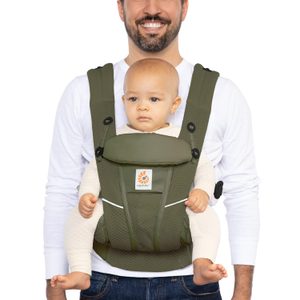
The Ergobaby Omni 360 carries newborns from birth without an insert and grows to toddler use. Four carrying positions (front inward, front outward, hip, back), lumbar support waistband and crossed shoulder straps make it the most versatile carrier tested. Hip-healthy HIPC-certified ergonomic M-position. The definitive everyday baby carrier in 2026.
- Newborn-ready without insert
- Four carry positions
- Lumbar support waistband
- HIPC-certified ergonomic positioning
- Expensive (~€180)
- Can run warm in summer
2. BabyBjörn Harmony — Best Comfort
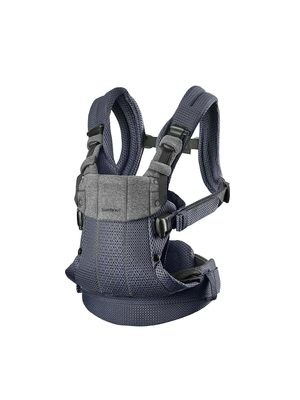
The BabyBjörn Harmony has the softest, most comfortable shoulder straps and back panel of any carrier in this guide. The 3D mesh is breathable and the padded hip belt excellent. Newborn-ready from 3.5kg, front-inward and front-outward positions. Simple buckle system that parents can put on alone. Swedish design and Oeko-Tex certified fabric.
- Softest, most comfortable carry tested
- 3D mesh for excellent breathability
- Easy to put on alone — simple buckles
- Oeko-Tex certified fabric
- Very expensive (~€250)
- No back carry position
3. Lillebaby Complete Airflow — Best for Hot Weather
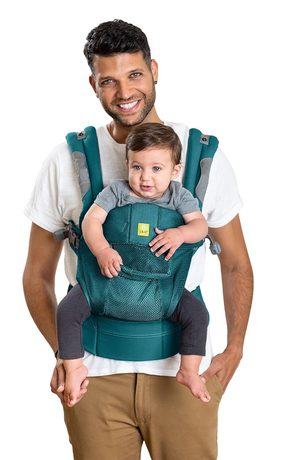
The Lillebaby Complete Airflow uses 3D spacer mesh fabric over its entire body panel — the most ventilated structured carrier tested. Six carry positions including a back carry from 6 months. Lumbar support, removable hood and adjustable straps. Popular in Scandinavia and the US for warm-weather carrying from summer onwards.
- Best ventilation — full-body 3D mesh
- Six carry positions
- Lumbar support waistband
- Back carry from 6 months
- Mesh less durable than woven fabric
- Newborn position requires more adjustment
4. Boba X — Best for Toddlers
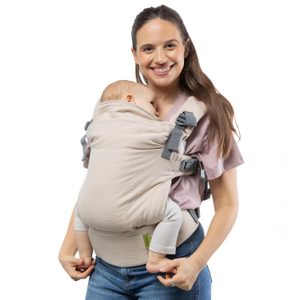
The Boba X extends weight capacity to 27kg — supporting toddlers longer than most carriers. The adjustable seat depth fits newborns through school-age children on a single carrier. Wide hip belt designed for extended wear on long days out. The best carrier for families who want to carry beyond 18 months without switching products.
- Carries up to 27kg — extended toddler use
- Adjustable seat fits newborn through big kids
- Wide hip belt for long carry sessions
- Durable construction
- Bulkier than compact carriers
- Higher learning curve for adjustments
5. Infantino Flip — Best Budget
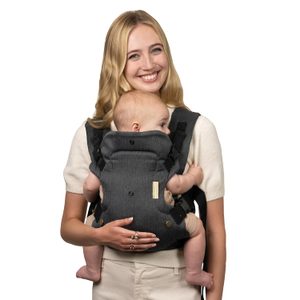
The Infantino Flip is the best under-€40 carrier tested. Four carry positions, suitable from birth with the narrow base, and grows with baby. Simple design with straightforward adjustments. Good for occasional use, grandparents, and families who want a spare carrier without spending on premium brands.
- Excellent value under €40
- Four carry positions
- Works from newborn
- Less back support than premium options
- Less padded for extended wear
What to Look for in a Baby Carrier
Ergonomic positioning
Baby should sit in an M-shape — knees higher than bottom, thighs fully supported. This is the natural frog position and distributes baby's weight correctly. Look for HIPC certification (International Hip Dysplasia Institute). Avoid carriers that let baby dangle with legs unsupported.
Weight range
Most structured carriers start at 3.5–5kg (newborn) and carry to 15–20kg (toddler). If you want to carry long-term, choose a carrier rated to at least 20kg. The Boba X extends to 27kg for extended use.
Carry positions
Front inward (infant facing you) is the standard newborn position. Front outward (facing world) is popular from 4-6 months. Back carry is useful for active parents from 6 months. Not all carriers offer all positions — check before buying.
Parent comfort
Wide, padded shoulder straps and a proper waistband transfer weight to the hips — reducing back strain dramatically. Try before you buy if possible, or check the return policy for comfort issues.
Our Verdict
The Ergobaby Omni 360 is the best all-round baby carrier in 2026 — newborn-ready, four positions and excellent support. Parents who prioritise carrying comfort above all else should try the BabyBjörn Harmony. On a budget, the Infantino Flip delivers remarkable value under €40.
Frequently Asked Questions
Front carrier or back carrier — which should I use?
Front-facing is for newborns to about 6 months — keeps baby close, supports head and neck. Outward-facing front carry works from 5-6 months when baby has neck control. Back carry is for 6 months+ when baby can sit unaided — the Ergobaby Omni 360 and Lillebaby Complete Airflow support all four positions. Back carry is more comfortable for longer walks because the weight is over your hips, like a backpack.
How long can I wear a baby in a carrier?
Most experts recommend limiting carrier wearing to 1-2 hours at a time, with breaks for the baby to stretch and breathe in different positions. Overall, several hours per day is fine and supports bonding. The structured carriers we recommend distribute weight properly so a 7-10kg baby is comfortable for adults to carry for 2-3 hour walks. For all-day use, alternate between carrier and stroller.
What's the weight limit on baby carriers?
Most ergonomic carriers like the Ergobaby Omni 360 and Lillebaby Complete Airflow support 3.2-20kg — from newborn to about 3 years old. The BabyBjörn Harmony supports up to 15kg. Toddlers can usually walk by 18-24 months, so carriers become useful mainly for naps, long days out, and tricky terrain. A toddler-specific hiking carrier (Osprey Poco Plus) extends use to age 4-5.
Is babywearing safe for newborns?
Yes, when done correctly. Follow the TICKS safety rule: Tight, In view at all times, Close enough to kiss, Keep chin off chest, Supported back. Newborns must be positioned upright with airway clear, knees higher than bottom (M-position), and head supported. The Ergobaby Omni 360 and BabyBjörn Harmony include newborn inserts for safe positioning from birth.