
Best Projector 2026 — Top 5 Compared & Ranked
As an Amazon Associate and member of other affiliate programs, we earn from qualifying purchases. How we test →
Last updated: September 5, 2026 • 10 projectors compared
- Hisense C2 Ultra — Best overall (4.8/5)
- Anker Nebula X1 — Best ultra-bright (4.6/5)
- JMGO N1S Ultra 4K — Best value 4K laser (4.3/5)
RGB laser projectors have redefined what a home projector can deliver in 2026. 3,000+ ANSI lumens, Dolby Vision support, and 25,000-hour lamp life make them a genuine TV alternative for screens from 100 to 300 inches. These five cover living room setups, short-throw installations, and gaming use cases.
Quick Overview
| Model | Best for | Score |
|---|---|---|
| Hisense C2 Ultra | Best overall Best Pick | ★★★★☆ 4.8 |
| Anker Nebula X1 | Best ultra-bright Runner-up | ★★★★½ 4.6 |
| JMGO N1S Ultra 4K | Best value 4K laser Best Budget | ★★★★½ 4.3 |
| BenQ TK700STi | Best gaming projector | ★★★★½ 4.4 |
| Epson EpiqVision Ultra LS800 | Best short-throw | ★★★★½ 4.5 |
1. Hisense C2 Ultra — Best Overall
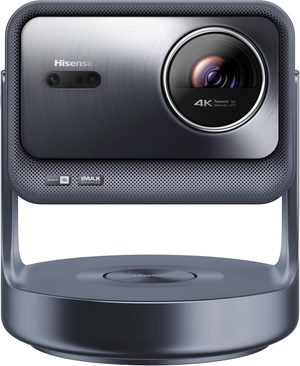
The Hisense C2 Ultra rates as the best projector of 2026 in independent testing. At 3,000 ANSI lumens from a triple RGB laser light source, it projects a clear, vibrant image at up to 300 inches in moderately lit rooms — a feat impossible with conventional lamp projectors. Dolby Vision and HDR10 support, 25,000-hour lamp life, HDMI 2.1 for 4K/120Hz gaming, and a responsive smart OS complete the package. Measured colour accuracy was described as the best tested at this price by Tom's Guide testers.
- 3,000 ANSI RGB laser — bright enough for 200-inch image in ambient light
- Dolby Vision — HDR tone mapping on par with premium TVs
- HDMI 2.1 — supports 4K/120Hz for next-gen console gaming
- 25,000-hour lamp life — effectively maintenance-free
- Requires throw distance of 2–7m for large images — not a short-throw unit
- Expensive (~£2,000) vs entry-level 4K projectors
The Hisense C2 Ultra also carries IMAX Enhanced certification and is designed for Xbox gaming — a combination that makes it the most feature-complete projector available in 2026 outside the ultra-short-throw segment.
2. Anker Nebula X1 — Best Ultra-Bright
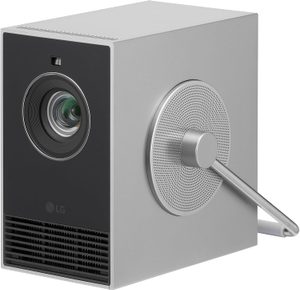
The Anker Nebula X1 measures 3,491 ANSI lumens — slightly exceeding its 3,500 rating in independent lab testing. At 4K with Dolby Vision, it surpasses the Hisense C2 Ultra in raw brightness output. Two HDMI 2.1 ports (one eARC), USB-A, USB-C, and optical audio cover all connection scenarios. Google TV delivers a full smart ecosystem. The gimbal design allows flexible placement angles. Where the X1 falls slightly short: gaming mode latency and audio quality are below the Hisense C2 Ultra.
- 3,491 measured ANSI lumens — brightest RGB laser projector tested
- Dolby Vision 4K + HDR10/HLG
- 2x HDMI 2.1 (1x eARC) — full AV receiver integration
- Google TV — full app ecosystem including Netflix, Disney+
- Gaming latency slightly behind Hisense C2 Ultra
- Audio quality not competitive with its video performance
3. Epson EpiqVision Ultra LS800 — Best Short-Throw
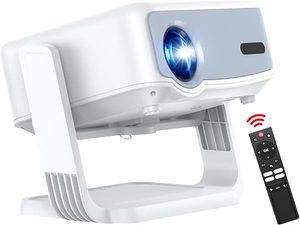
The Epson EpiqVision Ultra LS800 is an ultra short-throw (UST) projector — it can be placed 10–15cm from a wall and project a 100-inch image. This eliminates the shadow problem of conventional short-throw projectors and makes it suitable for rooms without ceiling space for mounting. 4,000 ANSI lumens from a 3-laser light source handles bright living rooms effectively. The integrated 2.1-channel speaker system with a 20W woofer delivers sound quality that surpasses any 4K TV soundbar combination at the same price.
- Ultra short-throw — 100-inch image from 10cm off the wall
- 4,000 ANSI lumens — handles bright ambient light
- Built-in 2.1-channel speaker — no soundbar required
- Android TV smart OS with all major streaming apps
- Very expensive (~£2,500)
- No HDMI 2.1 — limited to 4K/60Hz for console gaming
4. BenQ TK700STi — Best Gaming Projector

The BenQ TK700STi is purpose-built for gaming — 4ms input lag at 1080p/240Hz makes it measurably faster than any TV at the equivalent screen size. 4K/60Hz mode achieves 16ms, which is competitive for console gaming. At 3,200 ANSI lumens it handles gaming in lit rooms. The short-throw ratio (0.69) lets it project a 100-inch image from 1.5m distance. Android TV is built in, though gaming via a connected console is its primary purpose. For gaming on a screen above 100 inches, nothing else approaches this latency.
- 4ms input lag at 1080p/240Hz — fastest gaming projector available
- Short-throw 0.69 ratio — 100-inch image from 1.5m
- 3,200 ANSI lumens — good performance in moderate ambient light
- Android TV — streaming without separate device
- Lamp projector — shorter lifespan than laser alternatives
- No Dolby Vision — HDR10 only
5. JMGO N1S Ultra 4K — Best Value 4K Laser
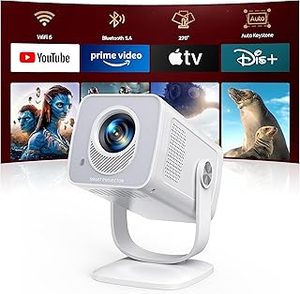
The JMGO N1S Ultra brings ALPD3.0 laser technology to a price point (~£700) previously occupied by DLP lamp projectors. At 2,200 ANSI lumens it is less bright than the Hisense or Nebula, but delivers measurably better colour accuracy than non-laser alternatives at the same price. The built-in gimbal adjusts the projection angle without moving the projector body — a genuinely useful feature for placement on any surface. Google TV enables full streaming app access. For a first laser projector on a budget, the value is exceptional.
- ALPD3.0 laser at ~£700 — genuine laser colour at lamp projector pricing
- Built-in gimbal — flexible projection angle without repositioning
- Google TV smart OS — full app ecosystem
- Better colour accuracy than DLP lamp alternatives at same price
- 2,200 ANSI lumens — needs darker room than 3,000+ lumen alternatives
- No Dolby Vision — HDR10 only
What to Look for in a Projector
Lamp vs laser
Laser projectors (RGB or single/triple laser) outperform lamp projectors in brightness, colour saturation, and lifespan (20,000–30,000 hours vs 3,000–5,000). The cost difference has narrowed dramatically in 2025–2026. For any projector that will be used regularly, laser is the correct choice.
Lumens and room brightness
Under 1,500 ANSI: dark room only. 1,500–2,500 ANSI: works with curtains closed. 2,500–3,500 ANSI: usable in moderately lit rooms. 3,500+ ANSI: performs in bright rooms with ambient light. Living room use with natural light requires 2,500 ANSI minimum.
Throw ratio and placement
Standard throw: 1.5–2.0m per metre of screen width. Short throw: 0.5–1.5m. Ultra short throw: under 0.5m. Choose based on room depth. UST projectors must sit directly below the screen; standard throw projectors mount at ceiling or on a shelf across the room.
Our Verdict
The Hisense C2 Ultra is the best projector in 2026 — RGB laser brightness combined with Dolby Vision and HDMI 2.1 delivers a cinema experience that no TV below 100 inches can match. For tight spaces, the Epson EpiqVision Ultra LS800 ultra short-throw eliminates placement constraints. On a budget, the JMGO N1S Ultra 4K makes laser technology accessible under £700.
Frequently Asked Questions
Projector or large TV — which is better for home cinema?
Projectors win for true cinematic immersion at 100-120 inch screen sizes — physically impossible with TVs at sensible cost. Modern UST projectors like the Hisense C2 Ultra and Anker Nebula X1 deliver excellent picture quality at sizes TVs can't match. TVs win on brightness for daylight viewing, on convenience (no setup), and on cost for sizes up to 75 inch. For dedicated cinema rooms, projector. For multi-purpose living rooms, large TV.
Are 4K projectors worth the upgrade from 1080p?
Yes at screen sizes over 80 inches. At 100+ inch screen sizes, pixel structure becomes visible on 1080p projectors — 4K resolution eliminates the screen-door effect. Below 80 inches, the difference is minimal. The Anker Nebula X1 and Epson EpiqVision Ultra LS800 are native 4K models worth the premium. Budget 'pixel-shift 4K' projectors process 1080p signals to look like 4K — better than true 1080p but not as sharp as native 4K.
Do I need a special screen for a projector?
Yes for best results, but you can start with a white wall. A proper ALR (ambient light rejecting) screen like the Vivid Storm dramatically improves picture in non-dark rooms — essential for UST projectors. A standard matte white screen works in darkened rooms for £100-200. Cheaper grey screens improve contrast in moderately lit spaces. For first-time projector buyers, start with a high-quality white wall — upgrade to a screen if you need more contrast.
How long do projector bulbs last and what does replacement cost?
Traditional lamp projectors: 2000-3000 hours (£100-200 replacement bulbs). Laser projectors like the Hisense C2 Ultra: 20,000-30,000 hours (effectively the lifetime of the projector). Over 5-10 years of moderate use, laser projectors are cheaper to own despite the higher upfront cost. Avoid traditional lamp projectors unless you're using occasionally and have a clear budget for ongoing replacements.