
Best VR Headset 2026 — Top 5 Virtual Reality Headsets Compared
As an Amazon Associate and member of other affiliate programs, we earn from qualifying purchases. How we test →
Last updated: September 5, 2026 • 6 headsets compared
- Meta Quest 3S — Best all-round standalone (4.8/5)
- PlayStation VR2 — Best for PS5 owners (4.6/5)
- Meta Quest Pro — Best productivity MR (4.4/5)
VR has matured. The best headsets in 2026 offer standalone gaming without a PC, mixed reality passthrough, and content libraries with hundreds of titles. Whether you want wireless standalone gaming, PS5-powered immersion, or professional mixed reality, there is a headset for every use case and budget.
Quick Overview
| Headset | Best for | Score |
|---|---|---|
| Meta Quest 3S | Best all-round standalone Best Pick | ★★★★☆ 4.8 |
| PlayStation VR2 | Best for PS5 owners Runner-up | ★★★★½ 4.6 |
| Meta Quest Pro | Best productivity MR | ★★★★½ 4.4 |
| Meta Quest 2 | Best budget standalone Best Budget | ★★★★½ 4.3 |
| Valve Index | Best PC VR experience | ★★★★☆ 4.2 |
1. Meta Quest 3S — Best All-Round Standalone
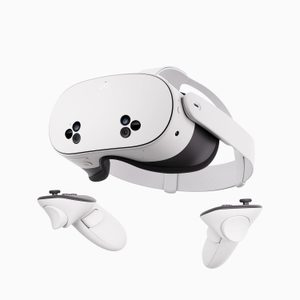
The Meta Quest 3S uses the same Snapdragon XR2 Gen 2 chip as the flagship Quest 3 and offers the same full-colour mixed reality passthrough, the same Air Link wireless PC VR streaming, and the same content library — for ~€330 versus ~€550. The difference is fresnel lenses rather than pancake, meaning a slight sharpness drop at the periphery. For most users it is unnoticeable in motion.
- Same processor and content library as Quest 3
- Full-colour mixed reality passthrough
- Air Link for wireless Steam VR access
- ~€220 cheaper than Quest 3
- Fresnel lenses — peripheral sharpness below Quest 3
- 2–3h battery life per charge
At €330 the Quest 3S delivers more capability per euro than any competitor. For anyone new to VR or wanting a versatile standalone headset without paying the Quest 3 premium, this is the recommendation.
2. PlayStation VR2 — Best for PS5 Owners
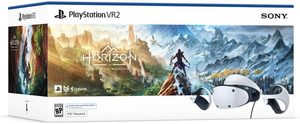
PlayStation VR2 uses OLED displays — deep blacks and contrast ratios are noticeable in dark scenes. Eye tracking enables foveated rendering for better image quality from the same hardware. PS VR2 Sense controllers include haptic feedback and adaptive triggers. Gran Turismo 7, Horizon: Call of the Mountain, and Resident Evil are first-party showcases.
- OLED displays — outstanding contrast and black levels
- Eye tracking with foveated rendering
- Haptic feedback and adaptive triggers in controllers
- Strong first-party PS5 VR exclusives
- Requires a PS5 — tethered only
- Smaller content library than Quest 3
3. Meta Quest Pro — Best Mixed Reality Productivity

The Quest Pro is designed for professionals and productivity use cases. Full-colour mixed reality at higher resolution than Quest 3, face and eye tracking for natural avatars, and an open-air design that doesn't isolate you from the room. Ideal for architects, designers, and enterprises exploring spatial computing workflows.
- Face and eye tracking for realistic avatars
- Open-ear design — awareness of surroundings
- High-resolution colour passthrough
- Strong mixed reality productivity apps
- Expensive at ~€1,000
- Heavier than Quest 3
4. Meta Quest 2 — Best Budget Entry Point

The Meta Quest 2 remains the most affordable way into standalone VR gaming. The full Quest content library is accessible — the same games available on Quest 3S run on Quest 2, at lower graphical settings on demanding titles. At ~€200 used or refurbished, it is the entry point for VR first-timers not ready to invest in Quest 3S pricing.
- Lowest cost standalone VR — ~€200 refurbished
- Access to full Quest content library
- Air Link PC VR streaming
- Proven platform with extensive accessory ecosystem
- Older Snapdragon XR2 Gen 1 — less powerful than Quest 3S
- No colour passthrough — grayscale only
5. Valve Index — Best PC VR Experience

The Valve Index remains the PC VR benchmark. The 130° field of view is the widest of any consumer headset, and 120Hz refresh eliminates judder. Index Knuckles controllers include per-finger tracking for natural hand interaction in games like Half-Life: Alyx. SteamVR lighthouse tracking delivers the most accurate room-scale tracking available.
- 130° field of view — widest available
- 120Hz refresh rate — minimal motion sickness
- Knuckles controllers with per-finger tracking
- Most accurate room-scale lighthouse tracking
- Expensive at ~€1,000 full kit
- Requires a high-end gaming PC (RTX 3080+)
- Setup complexity — base stations needed
Standalone vs PC VR vs Mixed Reality
Standalone VR
Meta Quest 3 and 3S run without a PC or console. Best for casual gaming, fitness apps, and users without a high-end gaming PC. The Quest Store, App Lab, and Steam via Air Link provide hundreds of titles.
PC VR
Valve Index connects to a gaming PC, which provides processing power for significantly higher visual fidelity. Best for simulation enthusiasts (flight sims, racing sims) and Half-Life: Alyx. Requires RTX 3080 or better.
Console VR
PlayStation VR2 tethers to a PS5. OLED displays and haptic feedback deliver an immersive experience, with strong first-party exclusives. Requires PS5 ownership — standalone is not possible.
Our Verdict
The Meta Quest 3S is the best VR headset for most people — it delivers the full Quest experience at €330. For PS5 owners, the PlayStation VR2's OLED displays and haptic controllers provide an unmatched console VR experience. For first-time VR buyers on a tight budget, the Meta Quest 2 remains a proven, affordable entry point.
Frequently Asked Questions
Meta Quest 3S vs PlayStation VR2 — which should I buy?
Meta Quest 3S is the best all-rounder — standalone (no PC needed), excellent game library, and PC VR compatibility via Air Link. PlayStation VR2 is the better choice if you already own a PS5 — superior graphics for AAA titles, eye tracking, and haptic feedback that's still industry-leading. For non-PS5 owners, Quest 3S is the clear winner.
Is VR worth it in 2026?
Yes for specific use cases. Gaming (Beat Saber, Half-Life Alyx, Resident Evil Village, Asgard's Wrath 2): excellent immersion you can't get elsewhere. Fitness (Supernatural, FitXR): legitimately effective workouts. Productivity (virtual monitors, remote meetings): emerging but useful. Not yet worth it for casual viewing or as a daily-use device. If you have a clear use case, VR delivers. If you're just curious, try a friend's first.
Does VR make people sick?
10-20% of users experience some motion sickness, especially in artificial locomotion games. Symptoms typically reduce after 1-2 weeks of regular use as the brain adapts. Start with stationary or teleport-locomotion games (Beat Saber, Job Simulator), build up to smooth movement gradually. The Meta Quest 3S has 120Hz display option which helps with motion comfort vs older 72-90Hz headsets.
How long can you wear a VR headset comfortably?
Most users find 30-90 minutes comfortable, then need a break for eye rest and to release the face pressure. Premium headsets (Meta Quest Pro, Apple Vision Pro) have better weight distribution and lighter front-loading, allowing 2-3 hour sessions. Aftermarket head straps (BoboVR M3 Pro, KIWI design) significantly improve comfort on the basic Quest 3S — recommended as a first accessory.