
Best Foam Roller 2026 — Top 5 for Recovery and Mobility
As an Amazon Associate and member of other affiliate programs, we earn from qualifying purchases. How we test →
Last updated: May 26, 2026 • 5 options compared
- TriggerPoint GRID 2.0 — Best overall (4.8/5)
- Rumble Roller — Best deep tissue (4.6/5)
- Hyperice Vyper 3 — Best vibrating (4.5/5)
The right foam roller speeds muscle recovery, improves mobility, and reduces post-workout soreness. From the clinically-trusted TriggerPoint GRID to the vibration-powered Hyperice Vyper 3, we compare five top options on density, texture, durability, and value.
Quick Overview
| Model | Best for | Score |
|---|---|---|
| TriggerPoint GRID 2.0 | Best overall Best Pick | ★★★★☆ 4.8 |
| Rumble Roller | Best deep tissue Runner-up | ★★★★½ 4.6 |
| Hyperice Vyper 3 | Best vibrating | ★★★★½ 4.5 |
| BLACKROLL Standard | Best for beginners | ★★★★½ 4.4 |
| Amazon Basics High-Density | Best budget Best Budget | ★★★★☆ 4.2 |
1. TriggerPoint GRID 2.0 — Best Overall
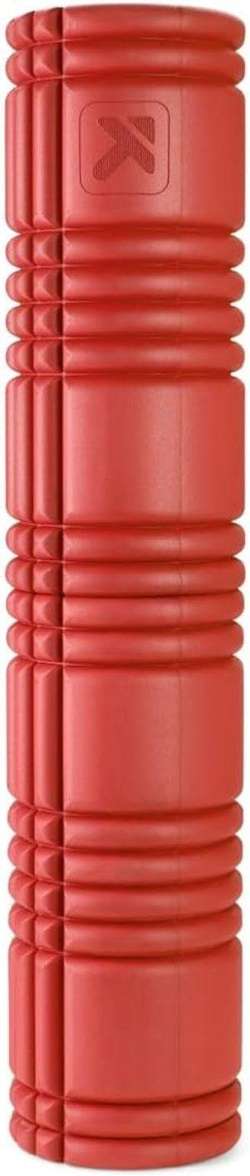
The gold standard in foam rolling. The patented multi-density GRID surface mimics a massage therapist's hands — three distinct zones (flat, bumped, grid) provide varied pressure targeting. The hollow core holds its shape through years of heavy use. 33 cm, supports up to 160 kg, and consistently top-ranked by physical therapists worldwide.
- Multi-density surface for varied targeted pressure
- Hollow core construction — retains shape long-term
- Used by physical therapists and elite athletes
- Portable 33 cm size
- Around $75 — pricier than basic rollers
- Firm surface may be intense for beginners
2. Rumble Roller — Best Deep Tissue
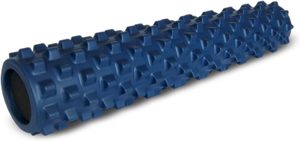
The Rumble Roller's pronounced flexible knobs dig into muscle tissue far more aggressively than any flat or grid roller. Where standard rollers provide compression, the Rumble Roller's spikes replicate deep-tissue massage for trigger point release. Available in 30 cm and 56 cm, firm and extra-firm options. Not for beginners — first sessions are intense.
- Deepest tissue penetration of any roller
- Flexible knobs adapt to body contours
- Excellent for specific trigger point release
- Two firmness levels, two lengths
- Not suitable for beginners — very intense
- Bulkier than standard rollers
3. Hyperice Vyper 3 — Best Vibrating
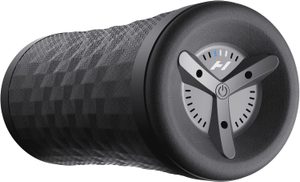
Combines rolling with vibration therapy at three speeds (30, 40, 53 Hz). Research shows vibration-assisted rolling accelerates recovery beyond rolling alone. The textured surface adds mechanical stimulation. USB-C charging, ~2 hours battery per charge. Premium product used by professional sports teams. Around $300.
- Vibration accelerates recovery beyond standard rolling
- 3 vibration speeds for warm-up to deep recovery
- USB-C charging, used by professional athletes
- Textured surface adds extra stimulation
- Expensive at around $300
- ~2-hour battery requires regular charging
4. BLACKROLL Standard — Best for Beginners
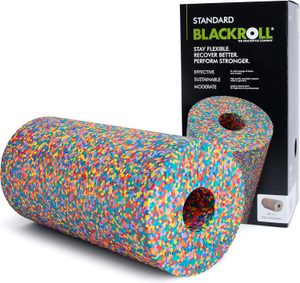
German-made closed-cell EPP foam that resists moisture and odour — more hygienic than open-cell alternatives. The medium density sits in the sweet spot: effective enough for real benefit, approachable enough for newcomers. 30 cm, 15 cm diameter. Widely used in physiotherapy clinics.
- Beginner-friendly medium density
- Closed-cell EPP foam — resists moisture and odour
- Made in Germany — quality construction
- Used in physiotherapy clinics
- Smooth surface less targeted than grid design
- May feel insufficient for advanced users
5. Amazon Basics High-Density — Best Budget
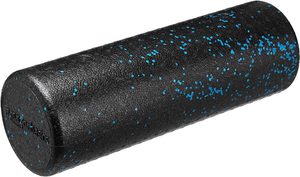
At around $19, the Amazon Basics foam roller is straightforward and functional. High-density foam holds its shape better than cheap spongy rollers from discount stores. Smooth cylindrical surface provides even pressure across muscles. Available in 30 cm, 45 cm, and 90 cm lengths. Perfect for first-time foam rollers or travel use.
- Extremely affordable at around $19
- Multiple length options available
- Good for beginners and casual use
- Easy to replace if lost or damaged
- Will compress and lose firmness over time
- Smooth surface less effective than grid design
What to Look for in a Foam Roller
Density and firmness
Soft rollers compress under bodyweight and provide minimal benefit — avoid the cheapest options. Medium density (BLACKROLL) suits beginners and sensitive areas. Firm (TriggerPoint GRID) is ideal for most people with athletic training backgrounds. Extra-firm (Rumble Roller) is for experienced users with specific deep tissue needs.
Surface texture
Smooth surfaces provide even, gentle pressure across large muscle areas. Grid patterns (TriggerPoint) simulate different types of touch — finger pads, thumbs, palms — for more varied stimulation. Knobbed surfaces (Rumble Roller) penetrate deepest into trigger points. Start smooth, progress to textured as your tolerance improves.
Length considerations
33 cm is the standard and most portable size. The 90 cm length allows full back rolling in one pass but is impractical to transport. 45 cm is a good compromise. For upper body and specific muscle groups, 30–33 cm is optimal. For thoracic spine mobility, longer rollers shine.
Vibration rollers
Vibration (Hyperice Vyper 3) demonstrably improves outcomes over rolling alone — faster myofascial release, better blood flow response. Worth the investment if recovery is a genuine priority. Battery-powered, heavier, and more expensive — not necessary for casual users.
Our Verdict
The TriggerPoint GRID 2.0 is the best foam roller for most people — multi-density surface, durable hollow core, and proven performance at a fair price. Deep tissue needs? Rumble Roller is unmatched. Recovery-focused athletes should consider the Hyperice Vyper 3. First-time rollers are best served by the BLACKROLL Standard, while the Amazon Basics is the sensible budget pick at around $19.