
Best Sleep Tracker 2026 — Rings, Watches & Under-Mattress Options
As an Amazon Associate and member of other affiliate programs, we earn from qualifying purchases. How we test →
Last updated: September 3, 2026 • 5 trackers compared
- Oura Ring 4 — Best overall (4.9/5)
- Whoop 5.0 — Best for athletes (4.7/5)
- Samsung Galaxy Ring — Best no-subscription ring (4.5/5)
Understanding your sleep patterns is the first step to improving them. The best sleep trackers in 2026 range from precision finger rings to non-wearable under-mattress pads. We compare five options across accuracy, comfort, HRV quality, and data depth.
Quick Comparison
| Model | Best for | Score |
|---|---|---|
| Oura Ring 4 | Best overall Best Pick | ★★★★☆ 4.9 |
| Whoop 5.0 | Best for athletes Runner-up | ★★★★½ 4.7 |
| Samsung Galaxy Ring | Best no-subscription ring | ★★★★½ 4.5 |
| Withings Sleep Analyzer | Best non-wearable | ★★★★½ 4.4 |
| Fitbit Sense 2 | Best budget smartwatch tracker Best Budget | ★★★★½ 4.3 |
1. Oura Ring 4 — Best Overall
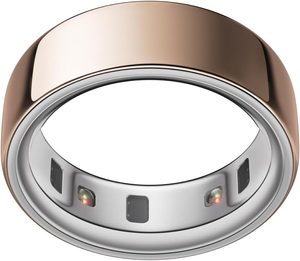
The Oura Ring 4 is widely considered the most accurate consumer sleep tracker available. Finger-based pulse measurement is more precise than wrist-based devices. Sleep stages, HRV, skin temperature, and respiratory rate combine into a Readiness Score. Seven-day battery, titanium construction, and a genuinely comfortable ring form for sleeping.
- Most accurate sleep stage detection
- Comfortable ring form — nothing to feel while sleeping
- 7-day battery life
- Nightly HRV and temperature tracking
- ~€350 hardware plus €5.99/month subscription
- Ring sizing requires a sizing kit before ordering
2. Whoop 5.0 — Best for Athletes
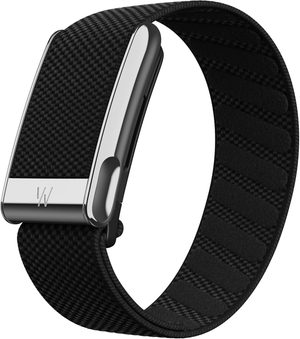
Whoop 5.0 contextualises sleep alongside training strain and recovery with its daily Strain Score and Recovery Score. The 5.0 algorithm improved sleep stage detection significantly. Continuous HRV sampling throughout the night — not just overnight averages — gives deeper insight into nervous system recovery. Hardware included in subscription.
- Best strain-recovery integration for athletes
- Continuous HRV monitoring throughout the night
- Improved sleep stage accuracy in 5.0
- Hardware included in subscription cost
- Ongoing subscription: €144–360/year
- No screen — all data via phone
3. Samsung Galaxy Ring — Best No-Subscription Ring
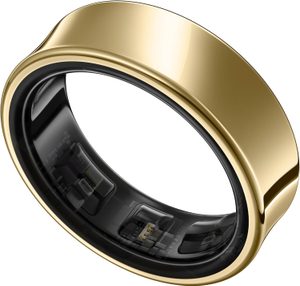
Samsung's Galaxy Ring delivers ring-form sleep tracking without a mandatory monthly subscription. Sleep stages, HRV, SpO2, skin temperature, and Energy Score — at ~€400 as a one-time purchase versus €350 + €72/year for Oura. Battery lasts 7 days. The best value ring tracker for anyone wanting a single upfront payment.
- No subscription — one-time purchase
- Ring form factor for comfortable sleep tracking
- HRV, sleep stages, SpO2 and temperature
- 7-day battery life
- Full features require Samsung Galaxy phone
- Sleep accuracy slightly below Oura Ring 4
4. Withings Sleep Analyzer — Best Non-Wearable
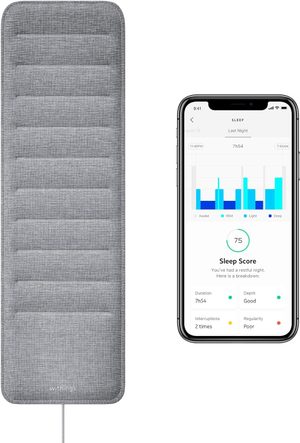
The Withings Sleep Analyzer slides under your mattress on the bed slats. No band, no ring, no charging — just lie down and it tracks. It measures respiratory rate, heart rate via micro-movements, and sleep cycles. Crucially, it screens for sleep apnea patterns. At ~€130 with no subscription, it's excellent value for comfort-seekers.
- Nothing to wear — ideal for comfort seekers
- Sleep apnea screening capability
- No subscription required
- Integrates with Apple Health and Google Fit
- No HRV tracking
- Only tracks one bed — not portable
5. Fitbit Sense 2 — Best Budget Smartwatch Tracker
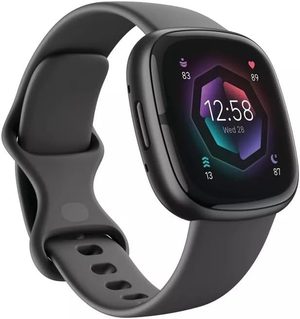
The Fitbit Sense 2 at ~€160 delivers a feature set that includes nightly HRV, skin temperature, SpO2, and Fitbit's Sleep Profile — a monthly sleep analysis that benchmarks your patterns against six animal archetypes (Giraffe, Tortoise, etc.) to identify habits for improvement. The EDA sensor also tracks daytime stress responses, adding context to why sleep quality fluctuates. No subscription needed for basic sleep data; Fitbit Premium unlocks Sleep Profile and Advanced Goals at €9/month. Compatible with both iOS and Android.
- Nightly HRV and skin temperature — more than most budget wearables
- Sleep Profile: monthly personalised sleep analysis
- EDA stress sensor adds recovery context
- Works with iOS and Android, no Samsung phone required
- Sleep Profile requires Fitbit Premium subscription (~€9/month)
- 6-day battery shorter than dedicated trackers
How to Choose a Sleep Tracker
Ring vs band vs non-wearable
Rings (Oura, Galaxy Ring) provide finger-based pulse accuracy and are the most comfortable for sleeping. Bands (Whoop, Amazfit) are cheaper but some users find wrist devices uncomfortable at night. Under-mattress options (Withings) require no wearing at all — ideal for sensitive skin or those who simply dislike wearables.
Subscription vs one-time purchase
Oura and Whoop require ongoing subscriptions for full features. Samsung Galaxy Ring and Withings are one-time purchases. Over 3 years, factor in subscription costs when comparing total price of ownership — the Galaxy Ring often works out cheaper than Oura long-term.
What metrics actually matter
Sleep stage accuracy and HRV trends are the most actionable metrics. Readiness or Recovery scores (Oura, Whoop) translate raw data into daily guidance. SpO2 tracking adds value for anyone with breathing concerns. Ignore features that don't match your actual use.
Our Verdict
The Oura Ring 4 is the reference standard for consumer sleep tracking in 2026 — most accurate, most comfortable, best data depth. For athletes, Whoop 5.0's strain-recovery framework is unmatched. For subscription-free ring tracking, the Samsung Galaxy Ring is the best value. If you dislike wearables, the Withings Sleep Analyzer is the only serious option. Budget choice with HRV and Sleep Profile: Fitbit Sense 2.