
Best Blender 2026 — Top 5 for Every Kitchen
As an Amazon Associate and member of other affiliate programs, we earn from qualifying purchases. How we test →
Last updated: September 20, 2026 • 5 blenders compared
- Vitamix Propel 750 — Best overall (4.9/5)
- Ninja BN701 — Best value (4.6/5)
- Blendtec Classic 575 — Best for soups (4.5/5)
A good blender transforms smoothies, soups, and sauces. The difference between a cheap model and a well-built one is enormous — powerful motors handle ice and frozen fruit without stalling, and well-designed jars clean in seconds. Here are the five best blenders in 2026 across every budget.
Quick Overview
| Blender | Best for | Score |
|---|---|---|
| Vitamix Propel 750 | Best overall Best Pick | ★★★★☆ 4.9 |
| Ninja BN701 | Best value Runner-up | ★★★★½ 4.6 |
| Blendtec Classic 575 | Best for soups | ★★★★½ 4.5 |
| NutriBullet Pro 900 | Best personal blender Best Value | ★★★★½ 4.3 |
| Braun TriForce Power Blender | Best European alternative | ★★★★☆ 4.1 |
1. Vitamix Propel 750 — Best Overall
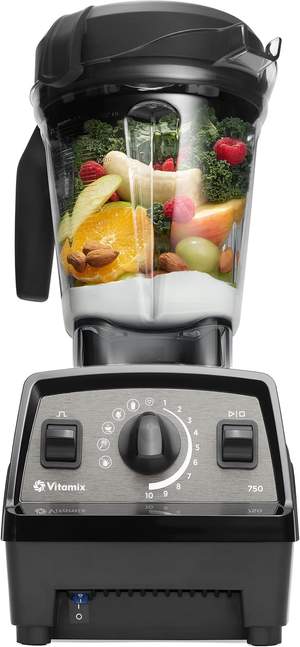
The Vitamix Propel 750 is the 2026 benchmark for high-performance home blenders. The 2.2 HP (1,642W) motor and laser-cut stainless steel blades handle ice, frozen fruit, fibrous greens, and nut butters without hesitation. Four automatic programs — smoothie, hot soups, frozen desserts, and cleaning. Ten variable speeds plus Pulse. Low-profile design fits under standard kitchen cabinets. 5-year warranty.
- 2.2 HP (1,642W) — handles anything without stalling
- 4 auto-programs + 10 variable speeds + pulse
- Self-cleaning in 30 seconds
- 5-year warranty and exceptional build quality
- $450–500 — significant investment
- Moderately loud during operation
For daily blending use, the Vitamix pays for itself over time — used every day for 5 years, the cost is under $0.30 per day. The results are noticeably smoother than any budget alternative.
2. Ninja BN701 — Best Value
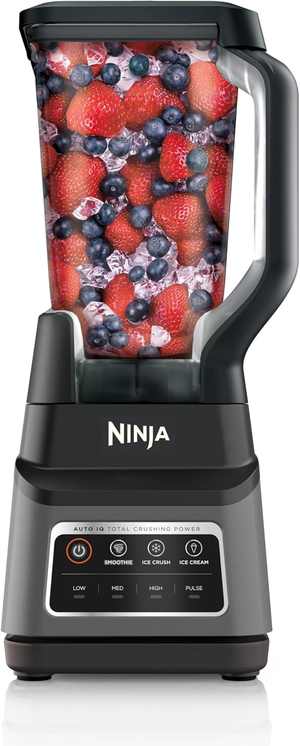
The Ninja BN701 is the community's most validated mid-range blender in 2026. Its 1,400W motor and Total Crushing Pitcher (1.7L) blends ice, frozen fruit, and fibrous vegetables into smooth results. Three Auto-IQ preset programs automate smoothies, ice crush, and frozen drinks. For buyers who blend daily but cannot justify Vitamix pricing, the BN701 is the most defensible purchase at around $110.
- 1,400W — more power than most mid-range competitors
- Auto-IQ programs for hands-off blending
- Exceptional performance per dollar at around $110
- Easy to find and widely available
- Plastic base feels less premium than Vitamix
- Can struggle with very tough ingredients like whole nuts
3. Blendtec Classic 575 — Best for Soups
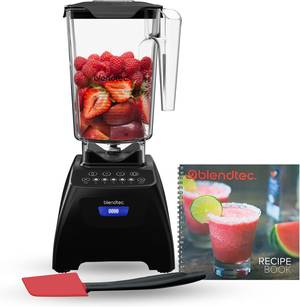
The Blendtec Classic 575's 1,560W motor creates a cyclonic vortex that blends hot soups and chunky vegetables into silky-smooth results. The patented "wings" blade design creates a vortex with no visible chunks. The flat-top lid is leak-proof under high speed — the safest choice for hot liquids. Six pre-programmed cycles. Wide 1.9L BPA-free jar is easy to clean. At around $460 it's premium but not as expensive as Vitamix.
- 1,560W — exceptional power for blending hot soups
- Leak-proof flat lid safe for hot liquids
- 6 pre-programmed cycles including soups and ice cream
- Wide jar is easy to clean
- Very loud during operation
- $440–480 — premium pricing
4. NutriBullet Pro 900 — Best Personal Blender
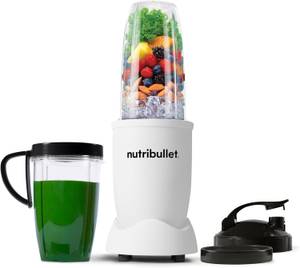
The NutriBullet Pro 900 is purpose-built for single-serve smoothies and protein shakes. The 900W motor handles frozen fruit, leafy greens, and soft nuts. The cups double as drinking vessels — blend and go in under a minute. Compact and lightweight. Relatively quiet compared to full-size blenders. For a daily morning smoothie routine, it's near-perfect. At around $78, affordable to buy a spare cup for meal-prep batching.
- Cup doubles as drinking vessel — no extra dishes
- Compact and lightweight — minimal counter space
- Relatively quiet at 900W
- Affordable at around $78
- Single-serve only — not suitable for batches or soups
- Can't safely blend hot liquids
5. Braun TriForce Power Blender — Best European Alternative
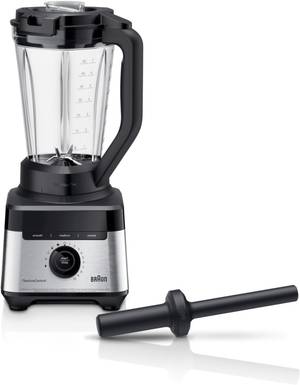
The Braun TriForce delivers 1,200W through three asymmetric stainless steel blades that pull ingredients down for faster, more uniform blending. Ten manual speeds, three texture settings, and three food presets cover smoothies, frozen drinks, and purees. The 2L Tritan jar is BPA-free and dishwasher-safe. Quieter than most 1,200W competitors thanks to Braun's noise-reduction housing. A solid mid-range European brand alternative to Vitamix at roughly half the price.
- 1,200W with asymmetric blade design — fewer pulses needed
- 10 manual speeds + 6 automated programs
- Quieter operation than typical 1,200W blenders
- 2L Tritan jar — dishwasher-safe and lightweight
- Not as powerful as Vitamix for nut butters or thick doughs
- Tritan plastic jar instead of glass
How Many Watts Do You Need?
By use case
Soft fruits and basic smoothies: 600–800W is enough. Frozen fruit, ice, and leafy greens: aim for 1,000W+. Professional-quality blending, nut butters, and hot soups: 1,200W+ is ideal. The Vitamix (1,642W) and Blendtec (1,560W) handle anything without struggle.
Glass vs plastic jar
Glass doesn't absorb odours or stains and is more hygienic long-term. BPA-free plastic (Vitamix, Blendtec) is durable, lightweight, and safe. Both work well — it's primarily personal preference. Glass jars like the Braun's are heavier but feel more premium.
Our Verdict
The Vitamix Propel 750 is the best blender for serious daily users — investment justified over years of use. For the best value at mid-range pricing, the Ninja BN701 at around $110 delivers exceptional performance-per-euro. For soup specialists, the Blendtec Classic 575's leak-proof hot-blend lid is the safest and most capable option.
Frequently Asked Questions
Vitamix or Ninja blender — which should I buy?
Vitamix Propel 750: best motor (longest-lasting, handles tough ingredients like frozen fruit and nuts), 7-10 year typical lifespan, made in USA. Ninja BN701: 70% cheaper, performs nearly as well for smoothies, frequent replacement (3-5 years). For daily blending and smoothies: Vitamix is worth the $450-500 premium over 10 years. For occasional use: Ninja's quality is excellent value.
Can a blender replace a food processor?
Partially. Blenders excel at liquefying (smoothies, soups, sauces) but struggle with chopping (vegetables, nuts) and slicing. The Vitamix Propel 750 has a dry container accessory that makes flour and grinds spices — extending its versatility. For chopping and slicing tasks, a food processor is essential. They're complementary, not competing.
How much should I spend on a blender?
$60-110 (Ninja base): adequate for daily smoothies, 3-5 year lifespan. $100-150 (Ninja BN701, mid-range Propel): excellent quality, 5-8 years. $440-500 (Vitamix Pro 750, Blendtec Designer): commercial-grade, 10-15 years. For daily smoothie users: spend $150+ for proper warranty and long-term value. For occasional use: $80-110 is fine.
What can I blend in a high-powered blender?
Smoothies (frozen fruit, ice, kale, nut butters). Hot soups (some can heat soup from cold via friction — Vitamix Pro). Nut butters (peanut, almond — turn whole nuts into smooth butter in 60 seconds). Frozen drinks (margaritas, daiquiris with ice). Flours (Vitamix dry container — grind grains, oats, beans). Sauces (pesto, hummus). The Blendtec Classic 575 includes preset programs for these tasks.