
Best Hiking Boots 2026 — Top 5 Compared & Ranked
As an Amazon Associate and member of other affiliate programs, we earn from qualifying purchases. How we test →
Last updated: September 5, 2026 • 10 models compared
- Salomon X Ultra 5 GTX — Best overall (4.8/5)
- Merrell Moab Speed 2 GTX — Best value (4.6/5)
- Lowa Renegade GTX Mid — Best budget (4.3/5)
Good hiking boots protect your feet, support your ankles and grip unpredictable terrain — all day, in all weathers. Testing covered 10 boots across day hikes and multi-day expeditions in wet, rocky and mixed terrain. These five are the best in 2026.
Quick Overview
| Model | Best for | Score |
|---|---|---|
| Salomon X Ultra 5 GTX | Best overall Best Pick | ★★★★☆ 4.8 |
| Merrell Moab Speed 2 GTX | Best value Runner-up | ★★★★½ 4.6 |
| Lowa Renegade GTX Mid | Best budget Best Budget | ★★★★½ 4.3 |
| Hoka Anacapa Mid GTX | Best for comfort | ★★★★½ 4.5 |
| Scarpa Zodiac Tech GTX | Best for technical terrain | ★★★★½ 4.6 |
1. Salomon X Ultra 5 GTX — Best Overall
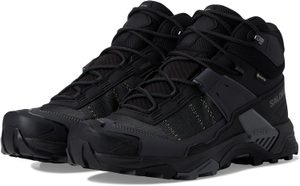
The Salomon X Ultra 5 GTX combines Gore-Tex waterproofing with Salomon's Contagrip MA outsole for outstanding traction on wet rock, mud and loose terrain. Light at 580g per pair with a low-to-the-ground design that improves stability. The SensiFit lacing system wraps the foot precisely. The best all-round mid hiking boot in 2026.
- Contagrip MA — excellent wet-rock grip
- Gore-Tex waterproofing
- Lightweight and agile for a mid boot
- SensiFit precise wrap lacing
- Less cushioning than max-comfort options
- Break-in period required
2. Merrell Moab Speed 2 GTX — Best Value
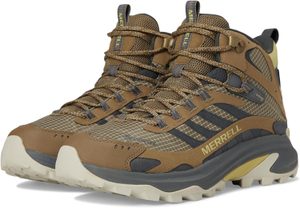
Merrell's Moab Speed 2 GTX bridges trail running and hiking boot — a versatile, comfortable option for day hikers who want to move quickly on trail. The Vibram TC5 outsole grips well on varied surfaces. Gore-Tex waterproofing and a low-drop running-style platform suit those accustomed to minimalist footwear.
- Versatile trail runner/hiking hybrid
- Vibram TC5 outsole — excellent grip
- Gore-Tex waterproofing
- Great value at ~$130
- Lower ankle support than traditional boots
- Less durable than leather options
3. Scarpa Zodiac Tech GTX — Best for Technical Terrain
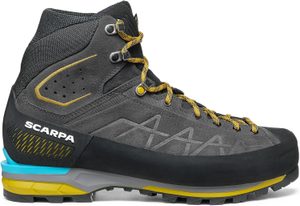
The Scarpa Zodiac Tech GTX is a semi-technical mountaineering boot — stiff enough for via ferrata and scrambling, waterproof and warm enough for alpine approaches. The Vibram Drumlin outsole bites into rock edges precisely. Italian leather upper develops fit over time. An excellent boot for serious mountain terrain.
- Semi-stiff for technical scrambling
- Vibram Drumlin outsole on rock
- Full leather upper — durable and mouldable
- Via ferrata and alpine approach capable
- Heavy at 760g per pair
- Significant break-in period
4. Hoka Anacapa Mid GTX — Best for Comfort
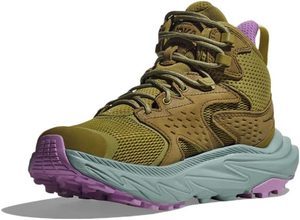
Hoka's maximal cushioning technology translates superbly to hiking boots. The Anacapa Mid GTX has a thick EVA midsole that absorbs impact on rocky trails, dramatically reducing fatigue on long days. Excellent for hikers with joint pain, heavy loads or those who simply prioritise comfort above all else.
- Maximum cushioning — reduces joint fatigue
- Gore-Tex waterproofing
- Excellent for heavy loads
- Immediate comfort — minimal break-in
- Less precise feel on technical terrain
- Chunky design not everyone's style
5. Lowa Renegade GTX Mid — Best Budget
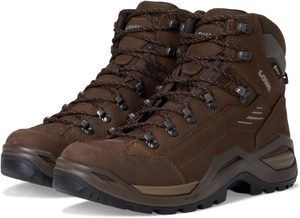
The Lowa Renegade GTX Mid is the most trusted budget hiking boot in Europe. German-made nubuck leather upper with Gore-Tex lining and Vibram Evo outsole. Excellent ankle support and durability — many hikers report 10+ years of use. A no-nonsense, deeply reliable choice that improves with age.
- Exceptional long-term durability
- Vibram Evo outsole — excellent grip
- Gore-Tex waterproofing
- Resoleable — extends lifespan further
- Heavy break-in period required
- Heavier than modern synthetic options
What to Look for in Hiking Boots
Waterproofing
Gore-Tex is the industry standard for waterproof breathable membranes. All five boots above use GTX. For dry conditions, non-waterproof boots are lighter and breathe better. For European hiking, waterproofing is almost always worth having.
Ankle support
Mid boots provide ankle support for technical terrain and heavy packs. Low-cut trail shoes are lighter but offer less protection on uneven ground. If you carry more than 10kg or hike technical terrain regularly, a mid boot is the safer choice.
Outsole grip
Vibram is the gold standard — the specific compound matters (TC5, Evo, Drumlin). Salomon's Contagrip is equally capable on wet rock. Avoid generic rubber outsoles on technical terrain.
Fit and break-in
Always try hiking boots on with the socks you'll hike in, at the end of the day when feet are slightly swollen. Boots should feel snug at the heel with a thumbnail's width of space at the toes. Leather boots require significant break-in; synthetic boots are more immediately comfortable.
Our Verdict
The Salomon X Ultra 5 GTX is the best all-round hiking boot in 2026 — lightweight, grippy and waterproof. For technical scrambling and alpine use the Scarpa Zodiac Tech GTX is in a class of its own. Hikers with sore knees or heavy packs should try the Hoka Anacapa Mid GTX for its exceptional cushioning.
Frequently Asked Questions
Waterproof or breathable hiking boots — which should I choose?
Waterproof boots (Salomon X Ultra 5 GTX with Gore-Tex, Merrell Moab Speed 2 GTX) keep feet dry in wet conditions but trap sweat in hot weather. Non-waterproof breathable boots dry faster after stream crossings and keep feet cooler in summer. For UK/Northern Europe hiking: waterproof is almost essential. For warm climates and trails without water crossings: non-waterproof breathable.
Hiking boots vs hiking shoes — which is better?
Hiking shoes (low-cut): lighter, more flexible, better for day hikes on established trails. Hiking boots (above ankle): more support, ankle protection, better for technical terrain, heavy packs (15kg+), and multi-day hikes. For most weekend hikers on UK trails, hiking shoes like the Merrell Moab Speed 2 suffice; for serious backpacking, boots like the Scarpa Zodiac Plus are worth the weight.
How do I break in new hiking boots?
Wear them around the house for 1-2 weeks before any hike. Take short walks (1-3km) over the next 2-3 weeks. By 30-50km, the boots should be fully broken in. Modern synthetic boots (Salomon X Ultra 5) require less break-in than traditional leather (Scarpa Zodiac Plus). Never break in new boots on a multi-day hike — blisters are guaranteed. Wear proper hiking socks (merino) from day one.
How long should hiking boots last?
500-1000km of trail use for quality boots. The Salomon X Ultra 5 GTX typically lasts 800km; Scarpa Zodiac Plus (leather) can hit 1500km with care. Replace boots when: visible sole tread wear, breakdown of midsole cushioning (feels less supportive), or waterproof failure (water seeps through). Resole-able boots (Scarpa) extend life by 50-100% — most synthetic boots are replace-when-worn.