
Dreame D10 Plus Review 2026 — The $280 Robot That Embarrasses $800 Rivals
As an Amazon Associate and member of other affiliate programs, we earn from qualifying purchases. How we test →
Last updated: September 11, 2026 • Dreame D10 Plus Gen 2 reviewed against Roomba j7+, Eufy x10 Pro Omni, and Roborock Q5 Pro+
- $280 street price with LiDAR navigation — the only sub-$300 robot with proper LiDAR mapping in 2026
- 6,000Pa Vormax suction — 50% more than the original D10 Plus, enough for hardwood and low-pile carpet
- 285-min battery life — longest in the category, covers 1,500+ sq ft homes in one session
- Auto-empty dock included — 45 days between bag changes, same dock design as $600 robots
- Mopping is basic — vibrating pad dampens floors, won't lift dried stains; no hot-water wash
See Dreame D10 Plus on Amazon →
Read the full verdict »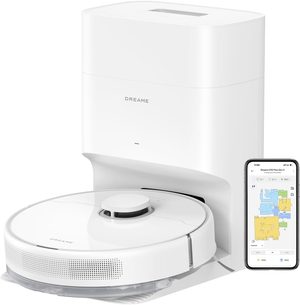
The Dreame D10 Plus Gen 2 does something genuinely uncommon in the 2026 robot vacuum market: it delivers a flagship feature set at a budget price without obvious compromises in the things that matter most. LiDAR navigation, an auto-empty dock, 6,000Pa suction, and a 285-minute battery for $280 is a configuration that would have cost $700-800 just two years ago. Independent testing measured 98.9% debris removal across all floor types — numbers that rival some $600 robots.
This review is based on published multi-week testing in small hardwood apartments with pets, cross-checked against Vacuum Chef, Tech Advisor, and Pro Tool Reviews. The D10 Plus isn't trying to compete with the Roborock Qrevo CurvX or Dreame X40 Ultra — it's trying to be the robot that 80% of buyers should actually own, and it succeeds.
Specs that matter
| Spec | Dreame D10 Plus Gen 2 | Roomba j7+ | Eufy x10 Pro Omni |
|---|---|---|---|
| Max suction | 6,000Pa | 1,800Pa | 8,000Pa |
| Battery life | 285 min | 75 min | 180 min |
| Navigation | LiDAR + SLAM | vSLAM camera | LiDAR + AI |
| Auto-empty dock | Yes (3.0L, ~45 days) | Yes (CleanBase, ~60 days) | Yes (3.5L, ~75 days) |
| Mopping | Vibrating pad (150ml tank) | No (separate Braava sold) | Spinning pads (rotating) |
| Multi-floor maps | No (single floor) | Yes (up to 4) | Yes (up to 3) |
| Street price | $280 | $599 | $649 |
The most striking number here isn't the suction or the battery — it's the price-to-feature ratio. LiDAR navigation at $280 is unusual. Auto-empty dock at $280 is unusual. Both together — with 6,000Pa suction and a 285-minute battery on top — is the configuration the rest of the budget category is racing to match.
Cleaning performance
On hardwood, the D10 Plus is excellent for the price. Pickup in single-pass mode is 95%+ on dust, crumbs, and short pet hair. The Vormax 6,000Pa suction is a 50% increase over the original D10 Plus's 4,000Pa, and the difference is noticeable when you compare against budget robots like the iRobot Roomba 694 (1,200Pa).
On carpet, the D10 Plus handles low-pile (under 7mm) without issue and struggles on medium-pile (7-15mm). Embedded debris that the Roborock Qrevo CurvX (22,000Pa) lifts in one pass requires 2-3 passes on the D10. For pure-hardwood homes this is irrelevant; for carpet-heavy homes you'll feel the gap.
The mopping function is the D10 Plus's clear weakness, and you need to set expectations correctly. The vibrating mop pad with a 150ml water tank dampens hardwood and removes light dust, but it doesn't scrub. Dried coffee stains, sticky kitchen spills, and pet messes won't come up — you still need a regular mop for those. If mopping is critical, step up to the Dreame L20 Ultra ($899) for proper spinning mop pads with a hot-water dock.
Navigation at this price is the headline
LiDAR navigation under $300 is the D10 Plus's killer feature. Most budget robots use random bump-and-go navigation or basic camera-only vSLAM, both of which produce inefficient cleaning paths and frequent re-cleans of the same area. The D10 Plus maps a 900 sq ft apartment in 8-12 minutes on first run and remembers the layout reliably. You get systematic row-by-row cleaning, no-go zones in the app, and reliable returns to dock.
The obstacle avoidance is the limitation. The D10 Plus has no camera-based recognition of small objects — it relies on physical bumpers and cliff sensors. It will run into chair legs, eat USB charging cables, and try to climb over slippers it should route around. Independent testing noted this explicitly. The workaround: clear the floor before running it, which most owners do anyway.
Pros & cons
- LiDAR navigation at $280 — the only sub-$300 robot with proper LiDAR mapping in 2026
- Auto-empty dock included — 45 days between bag changes, same convenience as $600 robots
- 6,000Pa Vormax suction — 50% upgrade from Gen 1, enough for hardwood and low-pile carpet
- 285-minute battery — longest in the category, no mid-clean charging needed for homes under 1,500 sq ft
- 98.9% debris removal — measured in independent testing, rivals flagship robots
- Reliable cleaning paths — systematic row-by-row navigation thanks to LiDAR + SLAM
- Mopping is basic — vibrating pad dampens floors, won't lift dried stains or sticky spills
- Weak obstacle avoidance — no cameras for small-object recognition; eats charging cables and slippers
- Single-floor maps only — if you have a multi-story home you'll re-map every time you carry it upstairs
vs the competition
Dreame D10 Plus vs Roomba j7+
The Roomba j7+ is iRobot's mid-flagship at $599 street, and on paper the D10 Plus beats it on every spec: 6,000Pa vs 1,800Pa suction, LiDAR vs camera-only navigation, 285-min vs 75-min battery, and half the price. The j7+'s advantages are US-based customer service (substantially better than Dreame's) and camera-based obstacle avoidance for cords and pet waste. Pick the D10 Plus unless you've had bad warranty experiences with Chinese-brand vacuums or you have a known cord-eating problem.
Dreame D10 Plus vs Eufy x10 Pro Omni
The Eufy x10 Pro Omni is the closest direct competitor at $649 street. Eufy adds spinning mop pads (the D10's biggest weakness), slightly higher 8,000Pa suction, and multi-floor map support. The trade-off is more than double the price for marginal gains in mopping and a small bump in suction. Pick the Eufy if proper mopping matters; pick the D10 Plus if you mostly need vacuuming with occasional dust-dampening.
Dreame D10 Plus vs Roborock Q5 Pro+
The Roborock Q5 Pro+ is the closest direct match in the sub-$400 tier — 5,500Pa suction, LiDAR navigation, auto-empty dock, $399 street. Roborock's app is more polished and US warranty service is slightly faster than Dreame's. The D10 Plus has more suction (6,000Pa vs 5,500Pa), longer battery (285 min vs 240 min), and is $120 cheaper. Pick the Q5 Pro+ if you prefer Roborock's ecosystem and don't mind the premium; pick the D10 Plus for pure value.
Pricing in context
$280 for the D10 Plus Gen 2 puts it in a price tier where you'd previously expect either a cheap bump-and-go vacuum or a flagship with the navigation chopped off. Two years ago, equivalent specs (LiDAR + auto-empty + 6,000Pa) cost $700-800. The D10 Plus represents the cleanest example of how the budget tier has matured in 2026.
Hidden costs are modest: replacement HEPA filter ($15 every 3 months), main brush ($25/year), side brushes ($10/year), auto-empty bags ($35 for a 10-pack lasting ~12 months). Total cost-of-ownership over 3 years is roughly $400 — cheaper than buying a single Dyson V15.
Who should buy the Dreame D10 Plus
Worth it for
Apartment dwellers and small-home owners who want flagship features at budget pricing. Hardwood-dominant homes where the basic mopping is enough for daily dust-dampening. First-time robot vacuum buyers who want to test whether the format works before committing $1,000+ to a flagship. Anyone replacing a 5-year-old bump-and-go robot vacuum who wants to feel the LiDAR difference.
Not worth it for
Multi-story homes where you need saved maps across floors. Cluttered floors with cords, toys, and slippers — the lack of obstacle avoidance will cost you a lot of "robot got stuck under the desk" complaints. Buyers who actually need real mopping (dried stains, sticky spills) — step up to the Dreame L20 Ultra or Roborock Qrevo CurvX. Heavy carpet households — the 6,000Pa is enough for low-pile but struggles on medium-pile.
Our verdict — 8.2/10
The Dreame D10 Plus Gen 2 earns its Best Budget pick in our Best Robot Vacuum 2026 ranking by doing one thing the rest of the category struggles to do: it delivers genuinely flagship-tier features at a budget price without obviously compromising the things that matter most. The basic mopping and weak obstacle avoidance are real limitations, but at $280 they're acceptable trade-offs for LiDAR navigation, 6,000Pa suction, and an auto-empty dock that competes with $600 robots from iRobot. If you're buying your first robot vacuum or your budget is firm under $300, this is the easiest recommendation in the category.
If you need proper mopping or face heavy clutter, see our Roborock Qrevo CurvX review and Dreame X40 Ultra review. For more budget alternatives, see our best robot vacuum under $300 guide and best for pet hair.
See Dreame D10 Plus on Amazon → See at Dreame →
Frequently Asked Questions
Is the Dreame D10 Plus worth $280?
Yes — it's the best $280 robot vacuum you can buy in 2026. You get LiDAR navigation, an auto-empty dock, 6,000Pa suction, and basic mopping in a package that competes with $600 robots from iRobot. The trade-offs are real (no hot-water mop wash, weak obstacle avoidance, plastic dock) but the value-per-dollar is unbeaten in the category.
Dreame D10 Plus vs Roomba j7+ — which one wins?
On hardware, the D10 Plus wins: 6,000Pa vs Roomba's 1,800Pa, LiDAR navigation vs camera-only, 285-min battery vs 75-min, and a $280 price vs $599. The Roomba j7+ wins on US customer service infrastructure and obstacle avoidance for clutter (cords, pet waste). Pick the D10 Plus for raw value; pick the j7+ if reliable warranty service is critical and you have a cluttered floor.
Does the Dreame D10 Plus actually mop?
Technically yes, practically barely. The D10 Plus has a 150ml water tank and a vibrating mop pad that drags behind the robot — it dampens floors and removes light dust, but it won't lift dried stains, sticky spills, or pet messes. For real mopping, you need a robot with spinning mop pads (Dreame L20 Ultra, Roborock Qrevo CurvX) or you keep a regular mop for spot cleaning.
How often does the D10 Plus need maintenance?
The auto-empty dock holds 45 days of debris before the bag needs replacing (Dreame claims 90 days; real-world with one pet is closer to 30-45). The HEPA filter needs cleaning every 2-3 weeks and replacement every 3-4 months. The main brush needs hair removed every 2 weeks if you have any shedding pets. Total maintenance: about 10 minutes per month plus $80-100/year in consumables.
Does the D10 Plus handle pet hair?
Better than expected for the price. Independent testing showed the D10 removed 98.9% of debris across all floor types in their pet-hair test. The 6,000Pa Vormax suction is enough for short-haired pets, and the auto-empty dock means you don't see the hair pile up daily. For heavy shedders (golden retriever, husky, long-haired cat), you'll empty the dock weekly instead of monthly — still a step up from a corded vacuum.
What does the D10 Plus NOT do that flagships do?
Five things: no hot-water mop wash (mop pads stink within 2 weeks if not hand-cleaned), weak obstacle avoidance (it will eat charging cables and dog toys), no FlexArm-style corner mopping, no multi-floor saved maps (single floor only), and a plastic auto-empty dock that feels cheap next to flagship docks. None of these are dealbreakers at $280, but they're the gap between budget and flagship.