
Best Kids Scooter 2026 — Top 5 Compared & Ranked
As an Amazon Associate and member of other affiliate programs, we earn from qualifying purchases. How we test →
Last updated: September 20, 2026 • 8 models compared
- Micro Mini Classic — Best toddler scooter (4.9/5)
- Micro Maxi Deluxe — Best older kids scooter (4.7/5)
- Razor A5 Lux — Best for speed (4.4/5)
The right scooter builds balance and coordination while being genuinely fun. Testing covered 8 scooters from toddler three-wheelers to older-kid kick scooters — these five are the best in 2026.
Quick Overview
| Model | Best for | Score |
|---|---|---|
| Micro Mini Classic | Best toddler scooter Best Pick | ★★★★☆ 4.9 |
| Micro Maxi Deluxe | Best older kids scooter Runner-up | ★★★★½ 4.7 |
| Razor A5 Lux | Best for speed | ★★★★½ 4.4 |
| Globber Go-Up Active Lights | Best folding / convertible | ★★★★½ 4.5 |
| Jetson Jupiter Mini | Best budget Best Budget | ★★★★☆ 4.2 |
1. Micro Mini Classic — Best Toddler Scooter
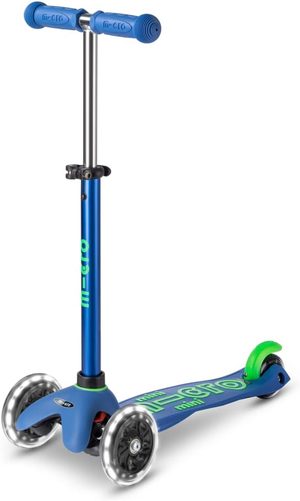
The Micro Mini Classic is the definitive toddler scooter. The three-wheel design (two front, one rear) provides exceptional stability for beginners aged 2–5. The lean-to-steer mechanism teaches children balance naturally. Swiss engineering and premium build quality — wheels roll smoothly, the T-bar adjusts as the child grows, and it lasts through multiple children.
- Lean-to-steer — builds balance naturally
- Three-wheel stability for beginners
- Adjustable T-bar height
- Swiss engineering — lasts for years
- Expensive for a toddler scooter — around $110
- No brake — foot or floor stopping only
2. Micro Maxi Deluxe — Best for Older Kids
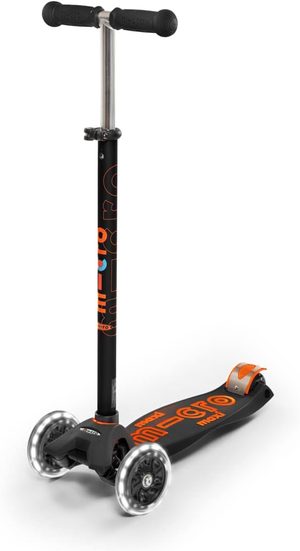
The Micro Maxi Deluxe is the step-up scooter for children aged 5–12 who've outgrown the Mini. Wider and longer deck for stability, 200mm wheels that roll over cracks and uneven surfaces easily, and a smooth rear foot brake. The T-bar adjusts in five positions. Still uses the learn-to-steer mechanism that makes Micro scooters uniquely fun to ride.
- Wider deck for older children
- 200mm wheels handle rough surfaces
- 5-position adjustable T-bar
- Rear foot brake
- Expensive — around $160
- Heavier than lightweight kick scooters
3. Globber Go-Up Active Lights — Best Folding
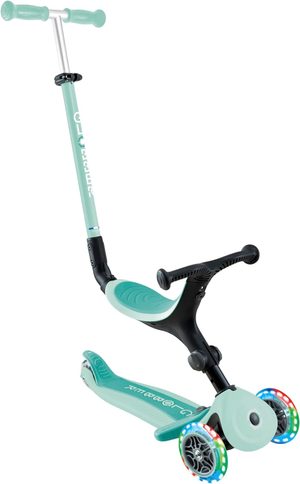
The Globber Go-Up Active Lights grows with your child from 3-wheel (ages 2–5) to 2-wheel configuration (5+) — one scooter that covers the full preschool and primary school age range. Motion-activated LED lights in the wheels and stem activate automatically when riding. One-button fold for easy transport. Adjustable handlebar, rear brake. The best scooter for families who want a single purchase that lasts years.
- 3-to-2 wheel conversion — grows from age 2 to 8+
- Motion-activated LED lights — safer visibility
- One-button fold for transit and storage
- Adjustable handlebar, rear brake
- Heavier than single-configuration scooters
- Premium price for the convertible design
4. Razor A5 Lux — Best for Speed
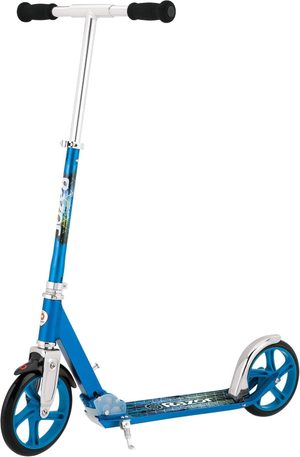
The Razor A5 Lux has 200mm wheels — the largest available on a non-electric kids scooter. Larger wheels roll faster with less effort and absorb bumps better. Aircraft-grade aluminium deck, extra-wide non-slip deck surface, fold mechanism and rear brake. Suitable for children 8+ and adults up to 100kg. The best scooter for distance and speed.
- 200mm wheels — fastest non-electric tested
- Aircraft-grade aluminium frame
- Extra-wide non-slip deck
- Adults can also use — up to 100kg
- Less suitable for young beginners
- No adjustable handlebar
5. Jetson Jupiter Mini — Best Budget
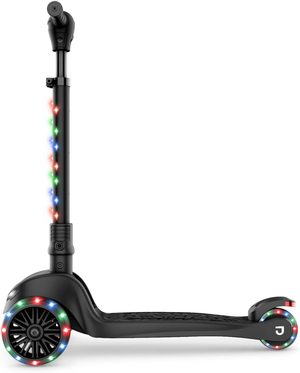
The Jetson Jupiter Mini is the best value three-wheel kick scooter for toddlers on a budget. RGB LED lights in the stem and wheels activate automatically — a huge selling point for young children. Collapsible folding design fits in a school bag. Three adjustable handlebar heights, rear foot brake, and a 110 lb weight limit. At under $45, it delivers Micro-like fun at a fraction of the Micro price.
- RGB LED lights — motion activated in stem and wheels
- Collapsible fold for portability
- Three adjustable handlebar heights
- Under $45 — best budget three-wheeler
- Lighter build than Micro — less durable long-term
- Smaller wheels than Micro — less smooth on rough surfaces
What to Look for in a Kids Scooter
Age and wheel configuration
Under 3: balance bike is better than a scooter. 2–5: three-wheel lean-to-steer (Micro Mini). 5–12: two-wheel kick scooter (Micro Maxi, Globber). 8+: larger wheel kick scooter (Razor A5). Three wheels are much more stable for beginners; two wheels are more fun once the skill is there.
Wheel size
Larger wheels roll faster and handle cracks and paving joints much better. 120mm is the minimum for comfortable riding. 165–200mm is noticeably smoother and faster. For commuting and distance, 200mm wins.
Adjustable handlebar
Children grow 5–7cm per year. An adjustable T-bar extends the useful life significantly. Check the minimum and maximum heights against your child's current measurements and expected growth.
Braking
Young children (2–4) should rely on foot/floor stopping — they don't yet have the hand coordination for lever brakes. From 5+, a rear foot brake is the standard. Hand-operated brakes work well from age 7+ with proper practice.
Our Verdict
The Micro Mini Classic is the best scooter for toddlers and young children — the lean-to-steer mechanism genuinely teaches balance more effectively than any alternative. For older children aged 5–12, the Micro Maxi Deluxe is the natural upgrade. Budget families get good value from the Segway Ninebot E8.
Frequently Asked Questions
What age can a child start using a scooter?
Most three-wheel scooters like the Micro Mini Classic and Globber Go-Up Active are designed for ages 2-5. The Micro Maxi Deluxe takes over from age 5-12. Younger children (under 2) lack the balance for even three-wheel scooters — try a balance bike instead. By age 6-8, children can transition to two-wheel scooters for greater speed and trick capability.
Three-wheel or two-wheel scooter — which is better for kids?
Three-wheel (Micro Mini, Globber Go-Up) is much more stable for ages 2-5 — kids can ride without worrying about balance. Two-wheel scooters (Micro Maxi, Razor models) require balance skills typically developed by age 5-6. The Micro Mini's tilt-to-steer system also teaches balance and weight-shifting skills that prepare children for cycling.
Do kids need a helmet on a scooter?
Yes — non-negotiable. Children fall off scooters frequently, and head injuries are the most serious risk. A properly fitted certified helmet is essential from the first ride. Knee and elbow pads are also strongly recommended for the first months of riding when falls are most likely. Always replace helmets after any significant impact, even without visible damage.
What scooter material lasts longest?
Aluminium deck scooters (Micro brand) are significantly more durable than plastic, surviving years of daily use. Wheels are the consumable — replace every 1-2 years. Bearings need annual cleaning. The Micro Mini Classic regularly survives 5-7 years across multiple siblings. Cheap plastic scooters often break within a year of regular use.