
Best Smart Light Bulb 2026 — Top 5 Smart Bulbs Compared
As an Amazon Associate and member of other affiliate programs, we earn from qualifying purchases. How we test →
Last updated: September 20, 2026 • 8 bulbs compared
- Philips Hue White & Color Ambiance — Best ecosystem (4.8/5)
- LIFX A19 Color — Best brightness no-hub (4.6/5)
- WiZ A19 Color — Best budget smart bulb (4.5/5)
Smart bulbs let you control colour, warmth, and schedules from your phone or voice assistant. The best in 2026 work with Alexa, Google Home, and HomeKit — and range from premium Philips Hue at around $50 a bulb down to Govee at under $10. Here are the five best across every budget.
Quick Overview
| Model | Best for | Score |
|---|---|---|
| Philips Hue White & Color Ambiance | Best ecosystem Best Pick | ★★★★☆ 4.8 |
| LIFX A19 Color | Best brightness no-hub Runner-up | ★★★★½ 4.6 |
| WiZ A19 Color | Best budget smart bulb | ★★★★½ 4.5 |
| THIRDREALITY Smart Color ZL1 | Best for Zigbee hubs Best Value | ★★★★½ 4.3 |
| Govee Smart Bulb | Best ambient effects | ★★★★☆ 4.1 |
1. Philips Hue White & Color Ambiance — Best Overall Ecosystem

Philips Hue is the standard for smart lighting. The updated White & Color Ambiance now delivers 1,100 lumens — brighter than previous generations. Hue Bridge enables local control for automations that run without internet. Integrates natively with Apple HomeKit, Alexa, Google Home, and SmartThings. 16 million colours, dynamic effects, and music sync in the polished Hue app.
- Most reliable smart lighting ecosystem
- Local control via Hue Bridge — works without internet
- 1,100 lumens — 10% brighter than before
- Native HomeKit, Alexa, Google Home support
- Around $50 a bulb — expensive per unit
- Hue Bridge (around $60) required for full features
For serious smart home setups with motion sensors, switches, and outdoor lights, Hue's wide accessory ecosystem justifies the premium. The starter kit (around $90 with Bridge) is the best way to begin.
2. LIFX A19 Color — Brightest No-Hub Bulb
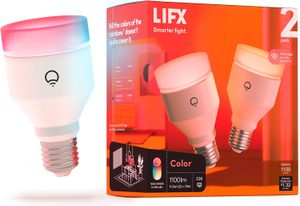
LIFX connects directly over Wi-Fi — no hub, no Zigbee, no Bridge. At 1,100 lumens it matches Hue in brightness with exceptional colour accuracy from multi-LED clusters. Works with Alexa, Google Home, and HomeKit. Setup takes under two minutes. Best for premium quality without ecosystem lock-in.
- No hub required — direct Wi-Fi
- 1,100 lumens — matches Hue brightness
- Exceptional colour accuracy
- Native HomeKit, Alexa, Google Home support
- Each bulb adds a Wi-Fi client — can strain congested networks
- Around $40 a bulb — more than WiZ
3. WiZ A19 Color — Best Budget Smart Bulb
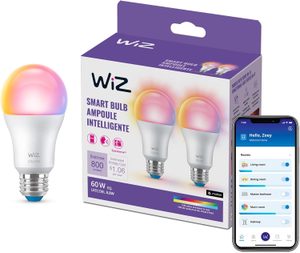
WiZ is a Signify brand (same parent as Philips Hue) — reliable quality at around $11 a bulb. Full colour spectrum, 2200K–6500K tunable white, Wi-Fi and Bluetooth. Works with Alexa, Google Home, and Siri Shortcuts. The WiZ app offers responsive scheduling and scene management. At around $11 a bulb, fill a living room for less than the cost of two Hue bulbs.
- Best price per bulb at around $11
- Full colour + 2200K–6500K white range
- Signify build quality — same parent as Philips Hue
- No hub required
- No native HomeKit (Siri Shortcuts only)
- Less reliable than Hue for complex automations
4. THIRDREALITY Smart Color ZL1 — Best for Existing Zigbee Hubs
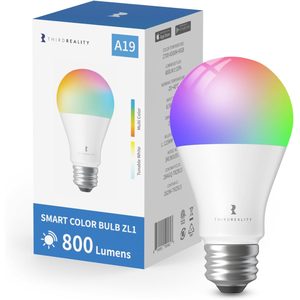
If you already have a Zigbee hub (SmartThings, Philips Hue Bridge, Amazon Echo with Zigbee), the ZL1 pairs straight to it without another app or account — including Home Assistant via ZHA or Zigbee2MQTT, which most consumer bulbs do not document. Each bulb also acts as a Zigbee repeater, so a few of them strengthen the mesh rather than loading it. Full RGB plus tunable white. Zigbee is more stable than Wi-Fi in multi-bulb setups. Good colour accuracy, 800 lumens. The hub-compatible option at around $12 a bulb — ideal for expanding an existing Zigbee network.
- Zigbee — most stable multi-bulb protocol
- Works with existing hubs without extra account
- Around $12 a bulb — cheapest colour option here
- Doubles as a Zigbee repeater
- Requires an existing Zigbee hub
- 800 lumens — dimmer than Hue or LIFX
5. Govee Smart Bulb — Best for Ambient Effects
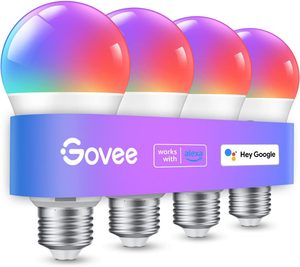
Govee specialises in RGB lighting effects. At around $29 for the pack, these sync with music and TV content (via Govee DreamView camera), with hundreds of pre-built scenes and real-time Music Sync mode. Wi-Fi and Bluetooth direct. Works with Alexa and Google Home. Best for gaming setups, entertainment rooms, and decorative accent lighting.
- Best dynamic lighting effects at any price
- Music Sync and TV sync modes
- Around $29 for the pack
- Build quality and longevity below Hue level
- Govee app is feature-rich but complex
What to Look for in Smart Bulbs
Hub vs Hub-Free
Hub-based bulbs (Philips Hue via Zigbee) are more reliable in large multi-bulb setups and work locally without internet. Hub-free Wi-Fi bulbs (LIFX, WiZ, Govee) are simpler to set up but each adds a Wi-Fi client to your network — this can cause connectivity issues in homes with 20+ smart devices.
Brightness (lumens)
Standard room lighting requires 800–1100 lumens per bulb. Hue and LIFX at 1100lm are noticeably brighter than 800lm alternatives, especially in larger rooms. For task lighting (reading, kitchen), choose higher lumen models.
Compatibility
All bulbs here work with Alexa and Google Home. HomeKit requires native support or a bridge — Philips Hue and LIFX offer native HomeKit; WiZ works only via Siri Shortcuts. If you use an iPhone-centric smart home, prioritise native HomeKit support.
Our Verdict
The Philips Hue White & Color Ambiance remains the best smart bulb ecosystem — reliable, bright, and deeply integrated with all major platforms. For the best value, the WiZ A19 Color at around $11 a bulb delivers most of the Hue experience at a fraction of the cost. For hub-free premium quality without ecosystem lock-in, choose LIFX.
Frequently Asked Questions
Philips Hue vs LIFX vs WiZ — which smart bulb ecosystem should I choose?
Philips Hue: most reliable, deepest ecosystem (motion sensors, switches, outdoor lighting), but requires a $60 bridge for full features. LIFX: brightest bulbs (1100+ lumens), works without a bridge over WiFi, but app and ecosystem less polished. WiZ: cheapest of the three ($11-15 per bulb), WiFi-only, good for budget setups. For first-time smart home: WiZ. For permanent smart home: Philips Hue.
Are smart bulbs worth the premium price?
Yes for specific benefits: voice control, automation (sunrise alarm, away-mode lighting), tunable white for circadian rhythm, colour for ambiance, and dimming on dimmer-incompatible fixtures. $10-20 per bulb premium is justified in main living spaces. For rarely-used rooms (utility, attic), standard LED bulbs are fine. Start with smart bulbs in bedrooms (sunrise alarm) and main living room.
Do smart bulbs work if the WiFi goes down?
Hue bulbs paired with the Hue Bridge: yes, with Zigbee local control via switches and motion sensors — internet failure doesn't break them. LIFX and WiZ: limited offline functionality — the bulbs continue at last state but app control breaks. The traditional wall switch always works on any smart bulb. Buy Hue for resilient smart-home dependencies; WiZ/LIFX for simpler bedroom/lounge use.
How long do smart bulbs last vs regular LEDs?
Equivalent: 15,000-25,000 hours (15-25 years at 3 hours per day). The smart electronics rarely fail before the LED. Cost-per-year for a $50 Hue bulb is roughly $2.50 over 20 years — far cheaper than regularly replaced incandescents. Smart bulbs do consume 0.5-1W in standby mode, adding $1-2 per bulb per year to your electricity bill.