
Canon RF 100-400mm Review: The Wildlife Lens You Can Actually Afford
As an Amazon Associate and member of other affiliate programs, we earn from qualifying purchases. How we test →
Last updated: September 2026 • Score: 9.0/10
- Our score — 9.0/10
- Best at — 640mm equivalent reach on Canon R7 APS-C
- Watch out for — f/5.6-8 variable aperture — slow in low light
The Canon RF 100-400mm f/5.6-8 IS USM costs around €900 and delivers sharp images at 400mm. On the Canon R7's APS-C sensor, you get 640mm equivalent reach for wildlife photography. For the price, this is an extraordinary value in the Canon RF system.
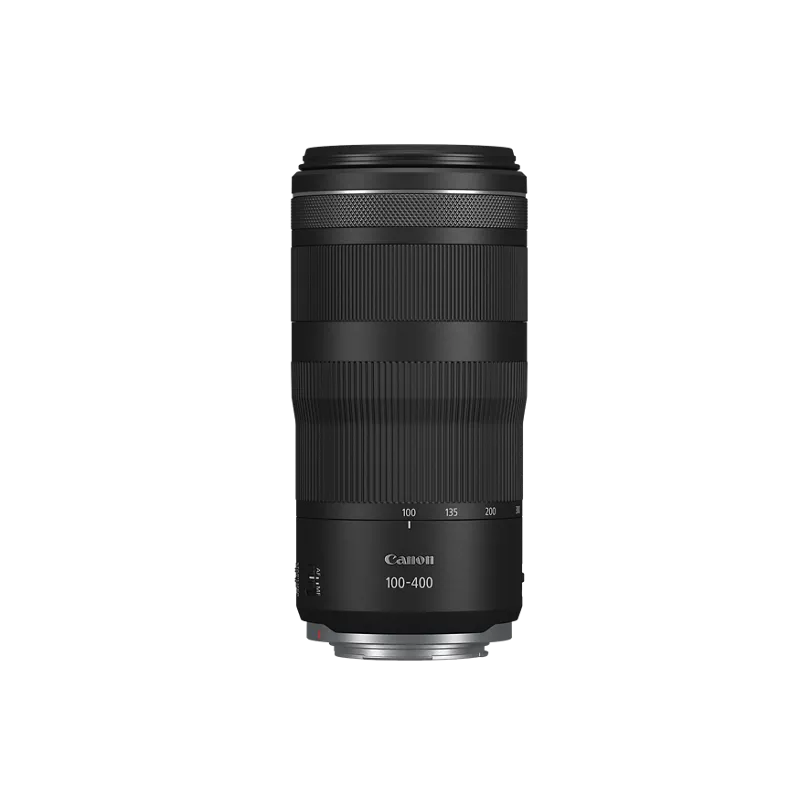
The best value wildlife telephoto in the Canon RF system. Sharp at 400mm, with Nano USM autofocus that is smooth and nearly silent. On the R7's APS-C sensor you get 640mm equivalent reach. 5.5-stop lens IS combines with the R7's 7-stop IBIS for up to 12 stops of total stabilization. Weather sealed.
- 640mm equivalent reach on Canon R7 APS-C
- 5.5-stop IS — up to 12 stops combined with R7 IBIS
- Nano USM — smooth, quiet, video-grade AF
- Weather sealed — dust and moisture resistant
- ~€900 — exceptional value for 400mm reach
- f/5.6-8 variable aperture — slow in low light
- No teleconverter support
- Edge sharpness not outstanding (not a concern for wildlife)
Specifications
| Spec | Value |
|---|---|
| Focal length | 100–400mm (160–640mm on APS-C R7) |
| Maximum aperture | f/5.6–8 (variable) |
| Image stabilization | 5.5 stops (lens IS) |
| Autofocus motor | Nano USM |
| Weight | ~1,050g |
| Weather sealing | Yes (dust and moisture resistant) |
| Filter thread | 77mm |
| Teleconverter support | Not officially supported |
| Price | ~€900 |
On the Canon R7 specifically
The Canon R7's 1.6x crop multiplier turns 400mm into 640mm equivalent reach. Combined with the R7's reasonable price (~€1,500), you get serious wildlife reach for under €2,500 total system cost.
Practical value: At 640mm equivalent for €900 lens + €1,500 body, this is extraordinary value. Full-frame equivalents would cost 2–3x more.
AF performance: The R7's subject tracking handles the f/8 maximum aperture well in good light. Animal detection works reliably on larger species.
Image quality
Centre sharpness: Excellent at 400mm f/8. Fine details are sharp and clear.
Edge sharpness: Good but not outstanding. Not a concern for wildlife where you centre the subject.
Colour rendering: Neutral and accurate. Canon's signature warm colour palette is present.
Chromatic aberration: Minimal, even at the extremes of the zoom range.
Distortion: Well-corrected. Very little barrel or pincushion distortion.
Autofocus and image stabilization
Nano USM autofocus: Smooth, quiet, and fast. Focusing is nearly silent even on the R7. Video-grade smooth focusing for videography.
Built-in IS: 5.5 stops in the lens. Combined with the R7's 7-stop IBIS, you get up to 12 stops of combined stabilization — more than enough for handheld at 400mm.
Practical impact: You can handhold at shutter speeds well below the traditional "1/focal length" rule. At 640mm equivalent, 1/400s is comfortable.
Build and handling
Weight: Approximately 1,050g. Reasonable for a 400mm lens. Balanced well on the R7.
Weather sealing: Yes. Dust and moisture resistant. Suitable for field work in variable conditions.
Zoom mechanism: Smooth, internal focusing. No barrel extension during zooming. Compact.
Focus ring: Smooth and well-damped. Manual focus override possible at any time.
Verdict: 9.0/10
The Canon RF 100-400mm is the best value wildlife lens for Canon R-series cameras. At €900, it delivers sharp images across the zoom range and combines with the R7's crop advantage to give 640mm equivalent reach.
Strengths: Exceptional value, sharp, compact, good IS, quiet AF, weather sealed.
Trade-offs: f/5.6-8 is slow, no teleconverter support, variable aperture (exposure changes as you zoom).
Best for: Bird and wildlife photographers on the Canon R7 or R6 wanting affordable reach. See our best lenses for bird photography guide for how it compares to other systems.
FAQ
Is the f/8 maximum aperture limiting?
Not as much as you'd think. With the R7's excellent AF tracking and built-in IS, f/8 is workable in good light. For birds in bright sunlight, it's not a limitation.
Does it work on full-frame Canon R bodies?
Yes, but the value proposition changes. On the R6 full-frame, you get 400mm reach instead of 640mm. The RF 100-500mm becomes more attractive on full-frame.
Can I use teleconverters?
Canon doesn't officially support teleconverters on this lens. The RF 1.4x mount teleconverter technically fits but isn't guaranteed to work optimally.