
Best Camera for Wildlife Photography 2026 — Top 5 Compared
As an Amazon Associate and member of other affiliate programs, we earn from qualifying purchases. How we test →
Last updated: September 2026 • 5 cameras compared
- OM System OM-1 Mark II — best all-round: 2x crop reach in a small, weather-sealed body (4.9/5)
- Canon EOS R7 — best budget: 1.6x crop and 15fps RAW (4.7/5)
- Sony A9 III — best for birds in flight: global shutter at 120fps (4.6/5)
Fast burst, reliable subject tracking, weather sealing, and real reach — these are what wildlife photography demands. We compare five cameras across MFT, APS-C, and full-frame to find the best option at every budget.
Quick Comparison
| Camera | Burst | Best for | Score | |
|---|---|---|---|---|
| OM System OM-1 Mark II | 120fps | All-round wildlife Best Pick | ★★★★☆ 4.9 | Check price → |
| Canon EOS R7 | 15fps RAW | Budget wildlife Runner-up | ★★★★½ 4.7 | Check price → |
| Sony A9 III | 120fps | Birds in flight | ★★★★½ 4.6 | Check price → |
| Nikon Z9 | 120fps | Professional | ★★★★½ 4.5 | Check price → |
| OM System OM-5 Mark II | 30fps | Budget MFT Best Budget | ★★★★½ 4.3 | Check price → |
1. OM System OM-1 Mark II — Best All-Round Wildlife

The OM System OM-1 Mark II is the definitive wildlife camera for 2026. The Mark II brings meaningfully improved AI subject detection: the camera can now identify and lock onto a single bird from up to eight in the frame simultaneously — a real-world advantage when shooting flocking species. 120fps Pro Capture fires frames before you press the shutter — you trigger on the decisive moment and review the burst afterward. The 2x crop factor gives 800mm equivalent reach from a 400mm lens. The buffer is faster on the Mark II, enabling longer Pro Capture bursts without slowdown. IP53 weather sealing, 8.5-stop IBIS, and a compact MFT form factor make this the most complete wildlife package at its price.
- 120fps Pro Capture with improved AI prediction
- AI identifies individual bird from up to 8 in frame
- 2x crop — 400mm becomes 800mm equivalent
- IP53 sealed, 8.5-stop IBIS
- 20MP MFT — not full-frame low-light performance
- Smaller lens ecosystem than Canon or Sony
2. Canon EOS R7 — Best Budget Wildlife

The Canon EOS R7 delivers professional burst speed at an enthusiast price. 15fps RAW is fast enough for most wildlife subjects, and Canon's electronic shutter pushes to 30fps for faster action. The 1.6x crop factor makes the RF 100-400mm equivalent to 640mm — excellent reach for birds without breaking the budget. Canon's newer animal detection autofocus is reliable and responsive. 32MP sensor gives you cropping flexibility in post-production. Weather sealing is adequate for most conditions. At around $1,550, the R7 is the smart choice for wildlife photographers who value value over ultimate performance — a professional camera at an enthusiast price.
- 15fps RAW burst (30fps electronic shutter)
- 1.6x crop — RF 100-400mm becomes 640mm
- 32MP for cropping flexibility
- Excellent value at around $1,550
- Less advanced AI tracking than OM-1 Mark II
- No Pro Capture equivalent
3. Sony A9 III — Best for Birds in Flight
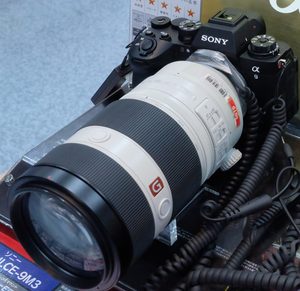
The Sony A9 III is the ultimate birds-in-flight camera. The world's first full-frame global shutter eliminates rolling shutter distortion entirely — wings don't bend or skew even at 120fps. Subject tracking autofocus is the fastest and most reliable of any camera available. The A9 III locks onto bird eyes and maintains that lock through complex, cluttered backgrounds with a consistency the competition has not matched. At 24MP, it prioritises speed over resolution — every pixel is optimised for capture performance rather than high-resolution output. At around $6,800, it's a specialist's camera. Unless birds in flight are your primary subject, the OM-1 Mark II offers better value.
- 120fps global shutter — zero rolling shutter distortion
- Fastest subject-tracking AF available
- Full-frame low-light capability
- Locks onto bird eyes in complex scenes
- ~$6,800 — professional price point
- 24MP — optimised for speed not resolution
- No crop factor reach advantage
4. Nikon Z9 — Best Professional Option
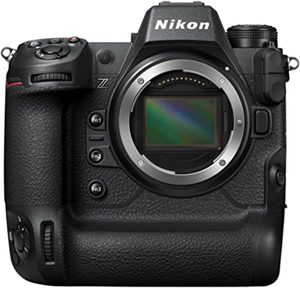
The Nikon Z9 is a workhorse for professional wildlife and sports photographers. 120fps burst with excellent autofocus lets you capture peak action reliably. The magnesium alloy chassis and professional weather sealing are built for daily use in demanding conditions. Nikon's Z system wildlife lens ecosystem is comprehensive and fast — the Z 180-600mm is a favourite among bird photographers. Build quality is exceptional — this is a camera that will outlast multiple seasons of intensive shooting. Like the Sony A9 III, the Z9 is for professionals: it's not the best value, but it's built to earn its cost through reliability and performance.
- 120fps burst with professional reliability
- Magnesium alloy professional weather sealing
- Fast AI subject detection
- Built for daily professional use
- ~$6,800 — professional price point
- Heavy — demanding for all-day handheld
- No crop factor reach advantage
5. OM System OM-5 Mark II — Best Budget MFT Wildlife
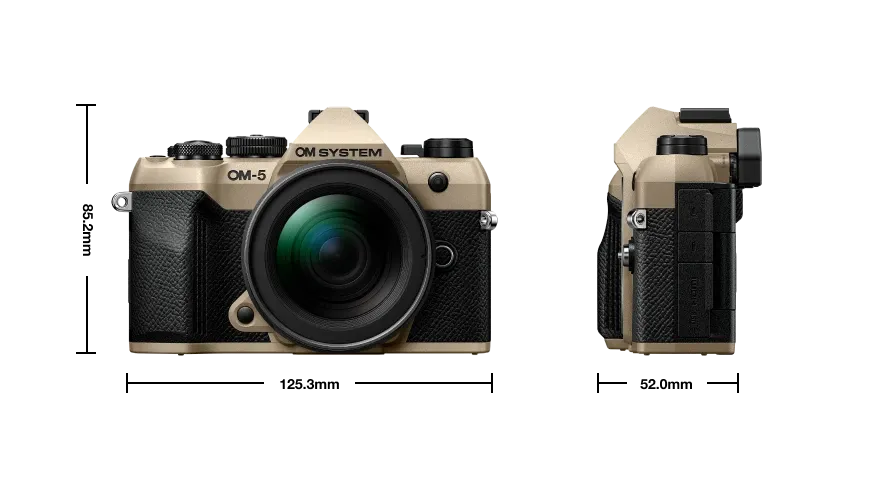
The OM System OM-5 Mark II is the entry point to serious MFT wildlife photography. It lacks the OM-1 Mark II's 120fps Pro Capture and advanced multi-subject AI bird detection, but retains the 2x crop factor — a 400mm lens gives 800mm equivalent reach. 30fps burst is more than adequate for most wildlife subjects including birds. IP53 weather sealing, compact form factor, and strong autofocus make it capable in demanding field conditions. The savings over the OM-1 Mark II can fund a quality telephoto lens — often a better investment for wildlife results than the body difference justifies. This is the practical wildlife camera: capable, affordable, and ready for real shooting from day one.
- 2x crop — same reach as OM-1 Mark II
- 30fps burst (sufficient for most wildlife)
- IP53 weather sealed
- ~$650 cheaper than OM-1 Mark II
- No 120fps Pro Capture mode
- Less advanced multi-subject AI tracking
- Slower autofocus in challenging light
Understanding Crop Factor Reach
Crop factor amplifies your lens reach. A 400mm lens looks longer on smaller sensors. The OM System uses Micro Four Thirds (MFT), which has a 2x crop factor — a 400mm lens becomes 800mm equivalent. This gives massive reach for wildlife without buying expensive glass.
Canon's APS-C sensors have a 1.6x crop. The Canon RF 100-400mm becomes 640mm equivalent on the R7 — still excellent reach but less dramatic than MFT. Full-frame sensors (Sony, Nikon) have no crop factor — a 400mm lens is 400mm, and you need longer glass to match MFT's reach advantage.
This is why MFT cameras like the OM-1 and OM-5 excel at wildlife and bird photography. You get 800mm equivalent reach while staying light and portable. The tradeoff is smaller sensors with slightly lower low-light performance. But for daytime wildlife in decent light, the reach advantage outweighs the sensor size disadvantage.
Our Verdict
Best all-round wildlife: OM System OM-1 Mark II — improved multi-subject AI tracking, 120fps Pro Capture, and 2x crop reach. Best budget: Canon EOS R7 at around $1,550 for professional burst speed. Best birds in flight specialist: Sony A9 III with global shutter. Best professional workhorse: Nikon Z9. Best affordable MFT entry: OM System OM-5 Mark II.
FAQ
Do I need a full-frame camera for wildlife?
No. MFT cameras like the OM-1 are excellent for wildlife because of their 2x crop reach. You can achieve 800mm equivalent with a 400mm lens. Full-frame excels in low light but costs more for equivalent reach. Choose based on your lighting conditions and budget, not sensor size.
What burst speed do I need?
15fps is adequate for most wildlife — mammals, insects, even some birds. 30fps handles faster subjects. 120fps is luxury for peak action capture. Professional photographers prefer 120fps, but amateurs do excellent work at 15fps.
Is weather sealing essential?
For wildlife in harsh conditions — rain, sand, extreme heat — yes, weather sealing is essential. For fair-weather shooting, it's nice but not critical. If you shoot outdoors regularly in unpredictable weather, IP53 or better is worth the investment.
OM-1 Mark II vs Canon R7 — which for birds?
The OM-1 Mark II if you photograph fast-moving birds regularly and want the best reach, tracking, and burst performance. The new multi-subject AI can isolate one bird from eight in the frame — a genuine advantage at feeding stations or in flocks. The Canon R7 if you want solid performance at lower cost. The OM-1 Mark II is the enthusiast's choice; the R7 is the pragmatist's choice.
Should I buy now or wait for 2027 models?
The 2026 models are excellent. Waiting for hypothetical 2027 improvements means missing a season of shooting. The OM-1 Mark II, Canon R7, and Sony A9 III are mature, proven designs that will hold their value and capability for years to come.