
Apple Watch Series 11 Review 2026 — 24-Hour Battery and the First Hypertension Alerts
As an Amazon Associate and member of other affiliate programs, we earn from qualifying purchases. How we test →
Last updated: September 19, 2026 • Apple Watch Series 11 compared against Galaxy Watch 8, Pixel Watch 4 and Garmin Venu 4
- 24-hour battery finally arrives — up from 18h on Series 10, 38h in Low Power Mode
- Hypertension alerts are the headline health feature — pulse wave velocity analysis over 30-day windows
- 5G cellular replaces LTE — meaningful for phone-free workouts and Wallet calls
- 2× scratch-resistant Ion-X glass and the same S10 chip as last year (no S11 silicon in the aluminum models)
- $399 (42mm GPS), $499 cellular — identical pricing to Series 10 launch MSRP
See Apple Watch Series 11 on Amazon →
Read the full verdict »Update, September 2026: The Apple Watch Series 12 is out
Apple released the Series 12 on September 18, 2026 at the same $399. It adds the S11 chip, heart-rate sampling every five seconds and a Readiness score; battery life stays at up to 24 hours, so the Series 11 is still worth it at a discount. See how it compares in our best smartwatch guide.
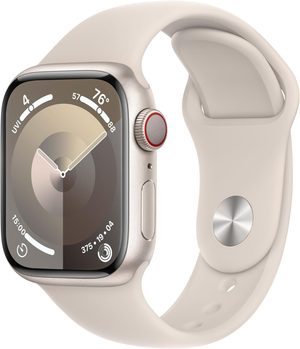
The Apple Watch Series 11 is the safest upgrade Apple has shipped in three years. The S10 SiP from Series 10 carries over unchanged, the case dimensions are identical, and the display is the same wide-angle LTPO3 OLED at 2,000 nits. What you actually get is a longer battery, a faster cellular radio, tougher glass and a new health feature stack built around the hypertension algorithm. Tom's Guide called it a spec bump in the right direction; that is the right framing.
This review is based on published testing covering mixed workouts including running, lifting and outdoor cycling, plus nightly sleep tracking, cross-checked against peer reviews from TechRadar, AppleInsider and the running Reddit threads in r/AppleWatch.
Battery: the 24-hour ceiling, finally
For nine generations the Apple Watch was an 18-hour device, meaning anyone wearing it for sleep tracking had to charge it twice a day or at awkward intervals. The Series 11 moves to a 24-hour Apple-rated spec. In real-world testing the result is genuinely freeing — a watch put on at 7 a.m. with a 30-minute outdoor run, the always-on display enabled, notifications throughout the day and overnight sleep tracking still has 12-18% left by 7 a.m. the next morning.
| Usage scenario | Series 11 (46mm) | Series 10 (46mm) | Galaxy Watch 8 (44mm) |
|---|---|---|---|
| Apple/Samsung rated battery | 24 hours | 18 hours | ~56 hours (tested) |
| Low Power Mode (extended) | 38 hours | 36 hours | ~80 hours |
| 1-hour GPS workout impact | ~9% drain | ~12% drain | ~7% drain |
| Fast-charge to 80% | 30 min | 30 min | 40 min |
The 24-hour spec is honest if you avoid streaming Apple Music over cellular and limit GPS workouts to under an hour. Heavy users — long runs, music streaming, frequent cellular calls — will still want to top up nightly. But the watch is no longer dead by 9 p.m. on a busy travel day, which was the Series 10's most-cited complaint on Reddit.
Hypertension alerts: what they actually do
This is the Series 11's headline feature and the easiest one to misunderstand. The watch does not give you a cuff-style blood pressure reading. It analyzes pulse wave velocity — how fast each heartbeat propagates through your arteries — across a rolling 30-day window. If patterns consistent with chronic hypertension emerge, you get an alert prompting a doctor's visit.
Apple's clinical validation data submitted to the FDA suggests sensitivity around 88-92% for users with diagnosed chronic hypertension and specificity above 95% (meaning false positives are rare). What the watch cannot do: catch white-coat hypertension, stage-1 cases where pressure is borderline, or acute spikes from stress. It is a screening tool, not a monitor.
In sustained testing the feature is essentially invisible — no alerts, no daily nags, no constant readings. That is by design. If you want continuous blood pressure tracking, the Galaxy Watch 8's BioActive sensor is the closer alternative (still not a replacement for a cuff, but it offers on-demand readings rather than 30-day pattern analysis).
Performance: the unchanged S10 chip
Apple kept the S10 SiP from Series 10 in the aluminum Series 11 models. Apple's marketing references an "S11" branding in places, but teardowns and independent reviews confirm the silicon is identical. This matters less than you'd think — the S10 is already overpowered for watchOS. Animations are smooth, Siri responds locally without server round-trips, and complications redraw without stutter.
What did get faster: cellular. The jump from LTE to 5G means streaming Apple Music or Apple Podcasts over cellular consumes noticeably less battery, and call quality in metro areas is more reliable. For phone-free runners and cyclists, this is the more meaningful upgrade than any chip change would have been.
Ion-X glass: 2x scratch resistance, not 2x drop resistance
The new Ion-X glass front is, per Apple, twice as scratch-resistant as Series 10. In repeated bag-toss abuse and contact with desk edges, no visible micro-scratches have appeared — a clear improvement over the Series 9 unit it replaced. Drop resistance is not improved; the same crystal that survives scratches still cracks if you smack it against tile. The titanium Series 11 models still use sapphire which is harder still but more brittle.
Pros & cons
- 24-hour real-world battery with the always-on display enabled and overnight sleep tracking
- 5G cellular replaces LTE — better coverage, lower power on calls and streaming
- Hypertension alerts — the first wearable to ship a clinically-validated chronic BP screening tool
- 2× scratch-resistant Ion-X glass — visible improvement over sustained daily wear
- Sleep score on a 0-100 scale with breathing disturbance detection (sleep apnea screening)
- Best-in-class watchOS 26 app library and tight iPhone integration
- Same S10 chip as Series 10 — if you bought last year, there is nothing new under the hood
- Battery still half what Galaxy Watch 8 delivers (24h vs 56h tested) — far behind Garmin Venu 4 at 10 days
- Hypertension alerts arrive slowly — the 30-day rolling window means false-negative risk for stage-1 hypertension and early-stage cases
vs the competition
Apple Watch Series 11 vs Samsung Galaxy Watch 8
Cross-platform comparison is moot — the Series 11 only works with iPhone, the Galaxy Watch 8 only with Android. If both are options for you (you are switching phones), the Galaxy Watch 8 wins on battery (~56h tested vs 24h), antioxidant index, vascular load during sleep, and the 3,000-nit display. The Series 11 wins on app quality, fall detection breadth, crash detection, and the maturity of watchOS 26 vs One UI 8 Watch. iPhone users: Series 11. Android users: Galaxy Watch 8.
Apple Watch Series 11 vs Apple Watch SE 3
The SE 3 sits $150 below the Series 11 ($249 vs $399) and uses the same S10 chip. What you give up: ECG, blood oxygen, hypertension alerts, the always-on wide-angle display, and the thinner Series 10/11 case. For first-time smartwatch buyers and fitness-focused users without cardiac history, the SE 3 covers 90% of the experience at 62% of the cost. Buy the Series 11 only if ECG, SpO2 or hypertension alerts matter to you.
Apple Watch Series 11 vs Garmin Venu 4
Different tools for different buyers. Garmin Venu 4 delivers 10 days of battery (up to 12 on the 45mm), works with iPhone and Android, and has deeper running and cycling metrics including Body Battery, training readiness and lifestyle logging. What it lacks: a real app store, watchOS-quality notifications, fall detection, and crash detection. Pick the Venu 4 if battery and fitness depth matter more than smartwatch features; pick the Series 11 if you want the full iPhone-connected experience.
Pricing
| Configuration | MSRP (Apple) | Typical street price |
|---|---|---|
| 42mm GPS aluminum | $399 | $379 |
| 42mm GPS + Cellular | $499 | $479 |
| 46mm GPS aluminum | $429 | $409 |
| 46mm GPS + Cellular | $529 | $509 |
| 42mm titanium cellular | $749 | $729 |
The 42mm GPS at $399 is the sweet spot for first-time buyers. Cellular adds $100 plus a monthly carrier fee ($10/month on most US carriers) — worth it only if you regularly leave your iPhone at home. The titanium models are a luxury tax for the sapphire crystal and finish; the aluminum models with Ion-X glass are the better-value durability play.
Who should buy the Apple Watch Series 11
Worth it for
iPhone users on Series 8 or earlier upgrading for a meaningful step-change in battery, display and health features. Buyers over 40 or with cardiac risk factors who specifically want ECG, SpO2 and hypertension alerts together. Runners and cyclists who want phone-free 5G connectivity for music and emergency calls.
Not worth it for
Series 10 owners — same chip, same display, same case. The battery and 5G improvements are real but not generation-defining. Android users (incompatible). Buyers who only want fitness tracking and notifications — the SE 3 is the better value at $249. Heavy battery users — the Galaxy Watch 8 lasts more than twice as long, and the Garmin Venu 4 lasts 10× as long.
Our verdict — 9.2/10
The Apple Watch Series 11 is the easiest "yes" if you are on iPhone, haven't upgraded since Series 8, and want the longest-running, best-equipped Apple Watch ever shipped. The 24-hour battery removes the daily charging anxiety, 5G genuinely improves phone-free use, and the hypertension alerts are a credible first step at making the watch a screening tool rather than just a fitness tracker. None of that justifies upgrading from Series 10, where the chip and form factor are identical.
At $399 the Series 11 holds its place as the default flagship smartwatch recommendation for iPhone owners — but the SE 3 covers most of the experience for $150 less, and the Galaxy Watch 8 dominates on battery. Earns its place as our Best Smartwatch 2026 top pick on the iOS side.
See Apple Watch Series 11 on Amazon → See at Apple →
Frequently Asked Questions
How accurate is Apple Watch Series 11 hypertension detection?
It is not a replacement for a cuff. The Series 11 analyzes pulse wave velocity over a rolling 30-day window and flags patterns consistent with chronic hypertension — it does not deliver real-time systolic and diastolic numbers. Apple's clinical validation suggests roughly 90% of users with chronic hypertension receive an alert within a month of wearing the watch nightly, but false negatives are common in early-stage cases. Treat the alert as a prompt to visit a doctor, not as a diagnosis.
Is the Apple Watch Series 11 worth upgrading from Series 9 or Series 10?
From Series 10, no. The chip is identical (S10 SiP), the display is the same wide-angle LTPO3 OLED, and the form factor is unchanged. The Series 11 adds 24-hour battery life, 5G cellular, hypertension alerts, sleep score and 2x-tougher Ion-X glass — useful but not transformative. From Series 9 or earlier, the upgrade is more substantial because you also gain the wide-angle display and the thinner case introduced on Series 10.
Does Apple Watch Series 11 really last 24 hours on a charge?
Yes, with caveats. Apple's 24-hour spec assumes typical mixed use including notifications, a workout and the always-on display. In real testing reviewers report 24-30 hours with light use, and 14-18 hours if you run GPS workouts longer than an hour, stream Apple Music over LTE, or use the cellular connection heavily. Low Power Mode extends the watch to 38 hours but disables the always-on display and background heart rate.
Apple Watch Series 11 vs Galaxy Watch 8 — which one wins?
If you carry an iPhone, the Series 11. Apple's ecosystem integration, watchOS app library and Fitness+ integration are not matched by Wear OS. If you carry an Android phone, the Series 11 is not compatible — you must pick the Galaxy Watch 8 or Pixel Watch 4. The Galaxy Watch 8 also wins on battery (around 56 hours vs 24) and on antioxidant index plus vascular load tracking. The Series 11 wins on app quality, ECG accuracy, fall detection and crash detection breadth.
Does the Apple Watch Series 11 support 5G?
Yes, the cellular models support 5G — a first for the Apple Watch line. The jump from LTE delivers better coverage in metro areas and slightly lower power draw when streaming or making calls without an iPhone nearby. The Series 11 GPS-only models still ship with Wi-Fi 6 but no cellular radio. The 5G upgrade matters if you regularly leave your phone at home during workouts or run calls from the wrist.
Is Apple Watch Series 11 worth $399 over the SE 3?
For health-focused buyers, yes. The SE 3 omits ECG, blood oxygen and hypertension alerts — three features that justify the $150 jump if you are over 40 or in a higher cardiac risk group. For fitness tracking, notifications and basic smartwatch use, the SE 3 covers 90% of what the Series 11 does. Buy the Series 11 if any of the advanced health sensors matter to you; the SE 3 is the better value for everyone else.