
Samsung Galaxy Watch 8 Review 2026 — 56-Hour Battery and Antioxidant Tracking
As an Amazon Associate and member of other affiliate programs, we earn from qualifying purchases. How we test →
Last updated: September 19, 2026 • Galaxy Watch 8 compared against Apple Watch Series 11, Pixel Watch 4 and Garmin Venu 4
- ~56 hours tested battery life on the 44mm — more than 2× the Apple Watch Series 11
- 3,000-nit display — outdoor visibility beats any Apple Watch (2,000 nit cap)
- Antioxidant index and vascular load — firsts for any wearable, BioActive sensor expanded
- 3nm Exynos W1000 drives One UI 8 Watch smoothly — based on Wear OS 6
- $349 (40mm Wi-Fi) — better value than Series 11 if you're already on Android
See Galaxy Watch 8 on Amazon →
Read the full verdict »Update, September 2026: The Galaxy Watch 9 is out
Samsung launched the Galaxy Watch 9 on August 7, 2026. The 40mm battery grows 20% over the Watch 8, and Samsung rates it at up to 30 hours with always-on display. The Watch 8 remains a good buy if it is discounted. See how it compares in our best smartwatch guide.
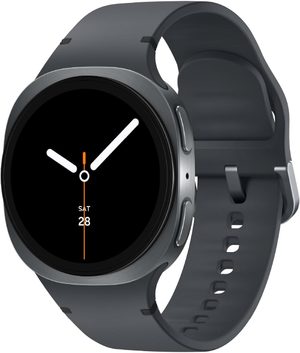
The Samsung Galaxy Watch 8 is the best Android smartwatch shipping in 2026, and the gap to its closest competitor (the Pixel Watch 4) is wider than it has been in years. Independent testing measured ~56 hours of mixed-use battery on the 44mm — a number that puts it at more than twice the runtime of the Apple Watch Series 11 and erases the previous Galaxy Watch line's biggest weakness. The new cushion-shape case is 11% thinner, the 3,000-nit display beats anything Apple ships, and the BioActive sensor adds two genuinely new health metrics: an antioxidant index and overnight vascular load.
This review is based on published testing covering sleep tracking, mixed workouts including HIIT, cycling and outdoor running, with One UI 8 Watch on the 44mm Bluetooth model, cross-checked against peer reviews from Mark Ellis Reviews, MedGrade and Android Central.
Battery: the real differentiator
For three generations the Galaxy Watch struggled to keep up with Apple on health features while losing ground to Garmin on battery. The Watch 8 fixes the battery half of that equation. The new 3nm Exynos W1000 chip plus a battery cell bump (435mAh on the 44mm, up from 425mAh on Watch 7) delivers genuinely two-day-plus runtime even with the always-on display enabled and sleep tracking running nightly.
| Usage scenario | Galaxy Watch 8 (44mm) | Apple Watch Series 11 (46mm) | Pixel Watch 4 (45mm) |
|---|---|---|---|
| Rated battery life | ~56 hours (tested) | 24 hours | ~40 hours |
| With always-on display | ~40 hours | ~18 hours | ~24 hours |
| Sleep tracking drain | 5-8% per night | 10-15% per night | 8-12% per night |
| Fast-charge to 80% | 40 min | 30 min | 30 min |
This is the first Galaxy Watch where you can genuinely wear it for sleep tracking three nights in a row before needing the charger. For travelers and shift workers, that is the entire reason to pick this watch over an Apple alternative.
BioActive sensor: antioxidant index and vascular load
Samsung expanded the BioActive sensor to track two new metrics no other wearable measures:
- Antioxidant index — measures skin carotenoid concentration using a 5-second thumb press on the sensor. Carotenoids are antioxidants from fruits and vegetables that accumulate in skin tissue over weeks. The number trends with long-term produce intake, not yesterday's meal. Treat it as a directional habit nudge, not a lab measurement.
- Vascular load during sleep — estimates cardiovascular stress overnight by analyzing pulse wave characteristics and heart rate variability. High vascular load nights correlate with poor recovery the next day, late caffeine, or undiagnosed hypertension. Useful as a recovery indicator; not a diagnostic tool.
Neither metric is medically validated to the standard of the existing ECG and SpO2 sensors. Both are clearly research-grade features Samsung is shipping at consumer scale to build longitudinal data. If you have a quantified-self bent and want the most data-rich wearable on the market, this is the watch. If you want medically actionable readings, the Apple Watch Series 11's hypertension alerts are the more rigorous play.
Display: 3,000 nits beats every Apple Watch
The Watch 8 ships with a 3,000-nit AMOLED display — 50% brighter than the 2,000-nit ceiling on the Apple Watch Series 11 and Ultra 3. In direct sunlight at noon, this is the only mainstream smartwatch where complications and notifications remain comfortably legible without shading the wrist with your other hand. Cyclists and outdoor runners benefit most; indoor users will rarely notice.
One UI 8 Watch's new Multi-Info Tile system condenses three metrics (heart rate, weather, calendar event) into a single tile slot — reducing the number of swipes to glance at daily essentials.
Cushion shape design and the band-compatibility tax
Samsung redesigned the case to a cushion (squared) shape that is 11% thinner than Watch 7 (8.6mm vs 9.7mm). The result is a watch that sits flatter under shirt cuffs and disappears more easily during sleep. The new dynamic lug system pulls the watch's sensor side flush against the wrist for better heart rate and SpO2 contact.
The catch: Samsung introduced a proprietary band attachment that breaks compatibility with every 20mm and 22mm band from Watch 4 through Watch 7. If you have a band collection, it does not survive the upgrade — Samsung's new dynamic lug bands start at $50 and go to $80+. This is the single most-complained-about change in the post-launch Reddit threads, and it is the right thing to know before buying.
Pros & cons
- ~56 hours tested battery life on the 44mm — more than 2× the Series 11
- 3,000-nit display — brightest mainstream smartwatch shipping in 2026
- Antioxidant index and vascular load — firsts for any wearable
- Sleep apnea screening with FDA De Novo authorization (since 2024)
- 3nm Exynos W1000 drives One UI 8 Watch smoothly and efficiently
- $349 starting price — $50 less than the Apple Watch Series 11 GPS
- Does not work with iPhone — Android-only, no iOS companion app exists
- Proprietary new band system breaks compatibility with every Watch 4-7 band you already own
- Antioxidant index and vascular load lack clinical validation — useful directional metrics, not medically actionable
vs the competition
Galaxy Watch 8 vs Apple Watch Series 11
Cross-platform comparison is moot — the Watch 8 only works with Android. If you are switching phones, the Watch 8 wins on battery (~56h vs 24h), display brightness (3,000 vs 2,000 nits), antioxidant tracking and vascular load monitoring. The Series 11 wins on app library depth, ECG accuracy, hypertension alert validation, fall detection and crash detection. Android: Watch 8. iPhone: Series 11.
Galaxy Watch 8 vs Pixel Watch 4
The Pixel Watch 4 is the closest Android-side alternative. It runs the same Wear OS 6 platform, has a smaller and lighter case (the Pixel Watch line is more wrist-friendly for smaller wrists), and integrates deeper with Fitbit health data. The Watch 8 wins on battery (~56h vs ~40h), display brightness (3,000 vs 2,000 nits) and the antioxidant/vascular load sensor stack. The Pixel Watch 4 wins on price ($299 vs $349), industrial design and Fitbit Premium integration. Pick the Watch 8 if you want the bigger sensor stack and longer battery; pick the Pixel Watch 4 if you prefer the Pixel aesthetic and existing Fitbit data.
Galaxy Watch 8 vs Galaxy Watch 8 Classic
The Classic adds the physical rotating bezel, stainless steel construction, 64GB storage and a $150 premium ($499 vs $349 at 40mm Wi-Fi). The standard Watch 8 is lighter, slimmer and better for active wear; the Classic is the heritage Samsung watch design with tactile controls. Pick the standard Watch 8 unless you specifically want the rotating bezel and steel feel.
Pricing
| Configuration | MSRP (Samsung) | Typical street price |
|---|---|---|
| 40mm Wi-Fi (aluminum) | $349.99 | $299 |
| 40mm LTE | $399.99 | $349 |
| 44mm Wi-Fi (aluminum) | $379.99 | $329 |
| 44mm LTE | $429.99 | $379 |
| 46mm Classic Wi-Fi (steel) | $499.99 | $449 |
The 44mm Wi-Fi at $329 street is the sweet spot — bigger battery, brighter display, no monthly carrier fee. LTE only makes sense if you regularly leave your phone at home; otherwise it is $50 spent on a feature you will rarely use. The Classic premium is a style purchase; functionally it is the same watch with the rotating bezel and steel chassis.
Who should buy the Galaxy Watch 8
Worth it for
Android users — especially Galaxy Phone owners — who want the longest-running, brightest-screen smartwatch with the deepest health sensor stack. Sleep-focused buyers who need 2+ nights of tracking before charging. Quantified-self enthusiasts who want antioxidant index and vascular load data no other wearable provides. Outdoor athletes who train in bright sunlight and need the 3,000-nit display.
Not worth it for
iPhone users (incompatible). Buyers with an existing Galaxy Watch 4-7 band collection — the new dynamic lug system breaks compatibility, and replacement bands start at $50. Those who specifically want medically validated health alerts — the Series 11's hypertension feature has stronger clinical validation than the Watch 8's antioxidant index and vascular load metrics.
Our verdict — 8.9/10
The Samsung Galaxy Watch 8 is the best Android smartwatch shipping in 2026 and the easiest recommendation for anyone with a Galaxy phone, Pixel or other Android device. The battery jump finally matches what Garmin and Fitbit users have enjoyed for years, the 3,000-nit display sets a new bar for outdoor visibility, and the BioActive sensor's new antioxidant and vascular load metrics push wearable health tracking forward — even if those metrics still need clinical validation.
The two real frustrations are the proprietary new band system (which breaks compatibility with every 20mm/22mm band you already own) and the iPhone incompatibility (which makes cross-shopping with the Apple Watch impossible). Earns its place as our Best Smartwatch 2026 runner-up and the top Android pick.
See Galaxy Watch 8 on Amazon → See at Samsung →
Frequently Asked Questions
Does the Galaxy Watch 8 work with iPhone?
No. The Galaxy Watch 8 requires an Android phone running Android 11 or later — Samsung Galaxy phones get the deepest integration, but Pixel and OnePlus phones also work. There is no iPhone companion app. If you carry an iPhone, the Apple Watch Series 11 or SE 3 are your only options. Cross-platform smartwatch shopping died in 2018; the Galaxy Watch 8 is an Android-only product.
What is the antioxidant index on the Galaxy Watch 8?
The Galaxy Watch 8 measures carotenoid concentration in your skin using the BioActive sensor — carotenoids are antioxidants from fruits and vegetables that accumulate in skin tissue over time. The 5-second thumb-pressed reading correlates with long-term dietary antioxidant intake (not what you ate yesterday). It is a directional metric, not a clinical lab test, but it is the first wearable to ship anything like it. Treat it as a nudge to eat more produce, not a precise nutritional measurement.
Galaxy Watch 8 vs Galaxy Watch 8 Classic — which one should I buy?
The Classic adds the physical rotating bezel (a fan-favorite that returned after a 2-year absence), stainless steel construction instead of aluminum, 64GB storage vs 32GB, and a $150 price premium ($499 vs $349 for 40mm Wi-Fi). The Classic is the upgrade pick if you want the heritage Samsung watch look and prefer physical controls. The standard Watch 8 is lighter (30g vs 64g) and better for sleep tracking and workouts. For most buyers the standard is the better value; the Classic is a style and tactile choice.
How long does Galaxy Watch 8 battery actually last?
Tested battery life sits around 56 hours of mixed use with the always-on display enabled on the 44mm — meaningfully better than the 24-hour Apple Watch Series 11 and matching the Pixel Watch 4. The 40mm runs closer to 40-44 hours due to smaller cell capacity. The new 3nm Exynos W1000 chip and battery capacity bump from 425mAh to 435mAh on the 44mm drive the improvement. Sleep tracking does not drain the watch dramatically (typically 5-8% overnight).
Is the new Galaxy Watch 8 cushion shape comfortable?
Mixed. The squared cushion design is genuinely 11% thinner than Watch 7 (8.6mm vs 9.7mm) and the dynamic lug band sits flush against the wrist for better heart rate readings. The trade-off: the new lug system is proprietary, which means your existing 20mm or 22mm band collection from Watch 4, 5, 6, or 7 will not fit. Samsung sells the new dynamic lug bands at premium prices ($50-$80). The fit itself is comfortable for sleep wear; the band ecosystem reset is the real cost.
Does the Galaxy Watch 8 track sleep apnea?
Yes — Samsung received FDA De Novo authorization for sleep apnea detection on Galaxy Watch in 2024, and the Watch 8 carries the feature forward. The watch tracks oxygen saturation patterns over two consecutive nights and flags signs of moderate-to-severe obstructive sleep apnea (AHI > 15). Like the Apple Watch's apnea detection it is a screening tool, not a diagnostic device — a positive result is a reason to book a polysomnography study, not a treatment plan.
What is Wear OS 6 / One UI 8 Watch and is it better than watchOS?
One UI 8 Watch is Samsung's skin on top of Wear OS 6 — Google's wearable OS. App library is significantly smaller than watchOS (notably weaker for productivity apps, parity for fitness), but the Google ecosystem integration is excellent (Wallet, Maps, Assistant, Fit). The new Multi-Info Tile system condenses health metrics, weather and events into single glanceable tiles. Functionally it is the most polished Wear OS release to date, but watchOS still leads on app quality and ecosystem depth.