
Best Diffuser for Macro Photography 2026 — What Actually Works
As an Amazon Associate and member of other affiliate programs, we earn from qualifying purchases. How we test →
Last updated: September 14, 2026 • Multiple approaches compared
- Cygnustech Diffuser — Industry standard for OM System (4.9/5)
- AK Diffuser — Best alternative cone diffuser (4.8/5)
- Godox MF12-K2 Twin Kit — No separate diffuser needed (4.5/5)
A bare flash creates harsh light and deep shadows at macro distances. The right diffuser changes everything — but most off-the-shelf options are designed for portrait work, not macro. Standard bounce cards and diffusers fail because at 10–30cm from the subject, the physics of light diffusion works against them. This guide explains what actually works and why.
Quick Comparison
| Diffuser type | Price | Effectiveness | Best for |
|---|---|---|---|
| Cygnustech Cone | ~€90 | Excellent Best Pick | Any system — universal adapter rings available |
| AK Diffuser | varies | Excellent Runner-up | Alternative cone diffuser — akdiffuser.com |
| Godox MF12-K2 | ~€160 | Good | All systems, no separate diffuser needed |
| DIY foam/plastic | ~€5 | Good | Any system, budget-conscious |
| Standard bounce card | €10–30 | Ineffective Avoid | Not suitable for macro |
Why standard diffusers fail at macro distances
Standard bounce cards and diffusers are designed for portrait work — shooting from 1–3 metres. At these distances, a diffuser 20–30cm away from the subject softens light effectively. The light angle is wide and forgiving. But at macro distances (10–30cm from subject), the geometry changes completely. The diffuser is now so close that it acts like a point light source again, defeating the purpose of diffusion.
Worse, most hotshoe diffusers sit on top of the flash, several centimetres above the lens axis. At macro distances, the lens itself casts a shadow across the insect. You get harsh shadows beneath compound eyes, blocked detail on the underside of the abdomen, and unnatural high-angle lighting. A bounce card designed for wedding portraits is nearly useless for macro work.
1. Cygnustech Diffuser — Industry Standard for OM System
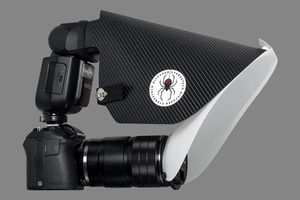
The Cygnustech macro diffuser is a large cone that wraps around the lens front, designed specifically for macro distances and mounting via a universal thread adapter. The diffusion surface is close to the subject, eliminating the point-source problem. Light wraps around symmetrically with minimal shadows. Available only from cygnustech.com — not on Amazon. Cost is roughly €80–100. For OM System photographers using Godox V860III or V1 flashes, the Cygnustech is the industry standard. It's reliable, well-engineered, and produces genuinely professional light.
- Designed specifically for macro distances
- Wraps around lens front — symmetric, shadow-free light
- Industry standard for OM System macro photographers
- Well-engineered and durable
- ~€90 — premium price
- Not sold on Amazon — order from cygnustech.com directly
2. AK Diffuser — Best Alternative Cone Diffuser
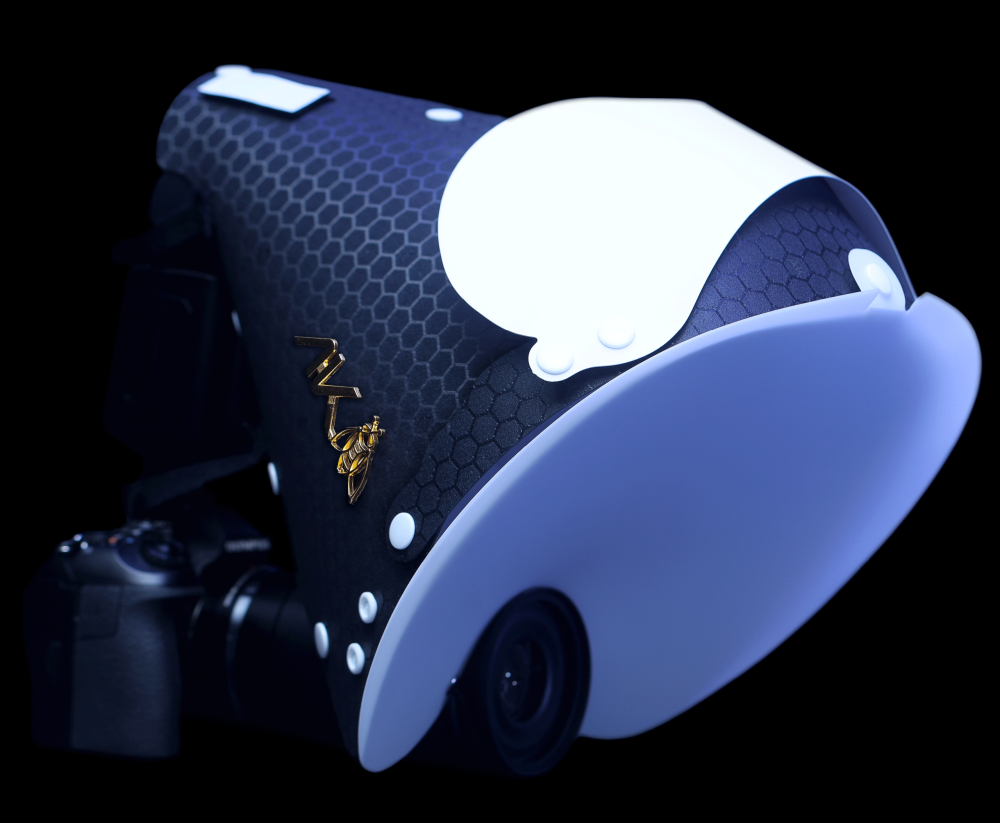
The AK Diffuser is a cone-style macro diffuser in the same category as the Cygnustech — designed specifically for macro distances and handheld insect photography. It mounts over the lens front and positions the diffusion surface close to the subject, eliminating the point-source problem. Multiple models available for different lens and flash combinations. Like the Cygnustech, it's sold direct from the manufacturer rather than on Amazon. If the Cygnustech is unavailable or you want an alternative, the AK Diffuser is a serious product used by professional macro photographers.
- Purpose-built cone geometry for macro distances
- Multiple models for different lens/flash combinations
- Professional-grade light quality at close range
- Not sold on Amazon — order from akdiffuser.com
- Pricing not listed upfront — varies by model and combination
3. Godox MF12-K2 Twin Kit — No Separate Diffuser Needed
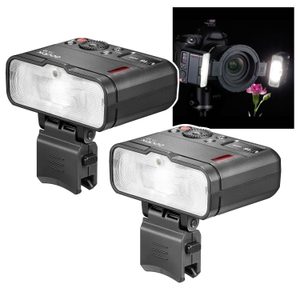
If you use a dedicated macro flash system like the Godox MF12-K2 twin kit, you don't need a separate diffuser. The MF12 mounts directly on the lens front and fires from there — it's already positioned correctly for close work. The light is inherently well-distributed without a diffuser. If this is your first macro setup and you're starting fresh, the MF12-K2 is better value than buying a hotshoe flash plus a separate diffuser. You get purpose-built macro light out of the box with no learning curve.
- No separate diffuser required — built-in optimal positioning
- Twin flashes give symmetric, balanced light
- TTL + HSS wireless via 2.4G
- Works with all camera systems
- Requires separate X2T trigger (~€35)
- Integrated non-swappable battery
4. DIY Diffuser — Nearly Free and Surprisingly Effective
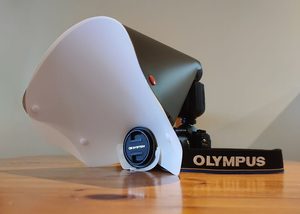
You can build a macro diffuser from materials in a hardware store. Take a white cutting board (€5), drill a hole to fit over your lens front, and tape your flash to the side. The white plastic becomes the diffusion surface. Alternatively, use translucent frosted acrylic sheets, foam, or even white plastic containers. DIY diffusers lack polish and look terrible — but they work. A white cutting board produces better light quality than any off-the-shelf bounce card, because it wraps around close to the subject. Outperforming commercial products for €5 is the real lesson here: at macro distances, proximity matters more than diffusion quality.
- ~€5 total cost — almost free
- Outperforms standard bounce cards at macro distances
- Works with any flash and camera system
- Immediately improvable — adjust shape to suit your setup
- Looks crude — purely functional
- Requires tape, tools, and some effort to build
- Less durable than commercial solutions
How to choose the right diffuser approach
Already own a V860III or V1 on OM System
Invest in the Cygnustech diffuser. It's the professional solution and produces museum-quality light for macro work. The €90 is well spent — it's the last diffuser you'll need to buy.
Starting macro fresh — no existing flash
The Godox MF12-K2 twin kit is better value than a hotshoe flash plus diffuser. You get purpose-built macro light out of the box with no learning curve. Total cost is similar once you add up flash plus diffuser separately.
Budget is tight
Build a DIY diffuser from a white cutting board. It costs €5 and outperforms commercial bounce cards by a huge margin. In photography, results matter more than aesthetics. This is a legitimate solution used by experienced macro photographers worldwide.
What to avoid
Standard off-the-shelf diffusers (bounce cards, mini softboxes designed for portrait work) will not work at macro distances. The physics doesn't support it. Don't buy these expecting macro-quality light — you'll be disappointed and waste money.
FAQ
What is the difference between the Cygnustech and AK Diffuser?
Both are cone-style macro diffusers that mount over the lens front and work on the same principle — positioning the diffusion surface close to the subject. The Cygnustech is the more established product with a larger following in the OM System community. The AK Diffuser offers multiple models for different lens and flash combinations and is a serious alternative used by professional macro photographers. Both produce professional-grade light at close range.
Does a diffuser reduce flash power?
Yes, slightly. A diffuser absorbs roughly 1–1.5 stops of light compared to bare flash. This means you may need to shoot at ISO 200 instead of ISO 100, or increase the flash power by one step. It's a minor tradeoff for vastly superior light quality.
Is a DIY diffuser as good as a commercial Cygnustech?
For practical macro photography, a DIY white cutting board is 85–90% as effective as a €90 Cygnustech. The main difference is durability and convenience. For light quality, the difference is negligible. If cost is your constraint, DIY is completely valid.