
Best Macro Lens for Beginners 2026 — Where to Start
As an Amazon Associate and member of other affiliate programs, we earn from qualifying purchases. How we test →
Last updated: September 14, 2026 • All camera systems covered
- Raynox DCR-250 — Any (52–67mm) (4.7/5)
- Olympus M.Zuiko 60mm f/2.8 — MFT (4.6/5)
- OM System 90mm f/3.5 IS PRO — MFT (4.9/5)
Starting macro photography is overwhelming. This guide tells you exactly what to buy first — depending on what camera you already own. The core advice: try before you commit. Before spending €500–2,000 on a dedicated macro lens, test the waters with a €70 accessory that converts your existing lens into a macro lens.
Quick Comparison
| Product | System | Best for | Score |
|---|---|---|---|
| Raynox DCR-250 | Any (52–67mm) | Try first — before any investment Start Here | ★★★★½ 4.7 |
| Olympus M.Zuiko 60mm f/2.8 | MFT | Best budget entry for MFT Runner-up | ★★★★½ 4.6 |
| OM System 90mm f/3.5 IS PRO | MFT | MFT upgrade — best overall macro | ★★★★☆ 4.9 |
| Canon RF 100mm f/2.8L | Canon RF | Best dedicated for Canon RF users | ★★★★½ 4.7 |
| Tamron 90mm f/2.8 Di III VXD | Sony E | Best value for Sony beginners | ★★★★½ 4.6 |
| 7Artisans 60mm f/2.8 MKII | APS-C mirrorless | Best budget under €200 Best Budget | ★★★★☆ 4.2 |
Step 1: Try This Before Buying a Dedicated Lens
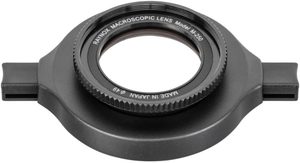
The Raynox DCR-250 is a diopter lens that clips onto your existing lens front and instantly converts any lens into a macro lens. Cost: ~€70. It achieves genuine 1:1 macro magnification at close distances with crisp, usable results. You get a realistic sense of macro work without commitment: handling insects, understanding light, mastering focus. If you hate macro after trying the Raynox, you saved thousands. If you love it, you know exactly what to buy next. Works on any lens with a filter thread between 52mm and 67mm via a universal snap-on adapter. Many experienced macro photographers keep the Raynox years later as a backup or secondary tool — it's genuinely useful at €70.
- ~€70 — fraction of the cost of a dedicated macro lens
- Works with virtually any lens — very versatile
- Autofocus continues to work normally
- Small and light — always fits in the bag
- Great for telephoto macro (attach to 100–400mm for distant insects)
- Image quality not quite as sharp as a dedicated macro lens
- Not a substitute for a dedicated lens at wide apertures
Step 2: Dedicated Macro Lenses by Camera System
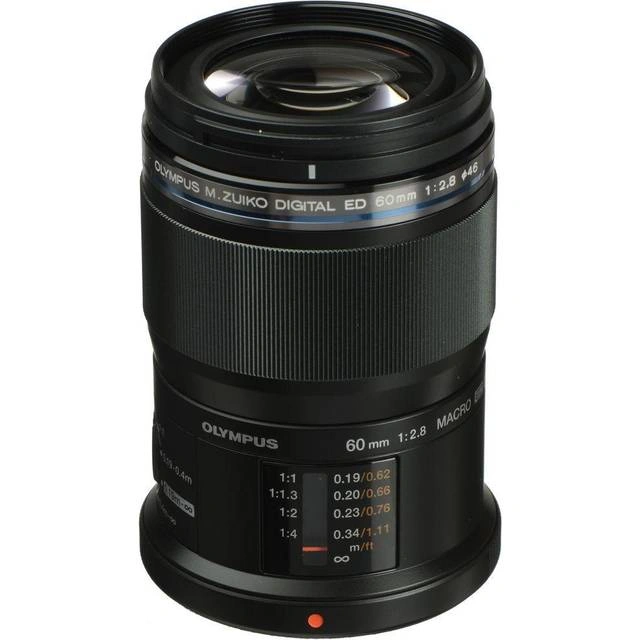
The 60mm is the starting lens for OM System / Micro Four Thirds shooters. It's compact, sharp, and affordable — 1:1 magnification from a portable package. On the MFT sensor, 1:1 magnification effectively provides 2:1 compared to full-frame, so even at this "modest" magnification, you get impressive insect detail. Weather-sealed for field durability. The shorter working distance (19 centimetres) is the main trade-off compared to 90mm alternatives — you're closer to your subject. But at €400, this lens is half the price of comparable alternatives. Many photographers never feel the need to upgrade.
- Excellent value — ~€400, half the cost of the 90mm
- Compact and lightweight for field carrying
- Weather-sealed for durability
- Good optical quality for the price
- Shorter working distance (19cm) than longer macros
- No in-lens IS (camera IBIS compensates)
- Older AF — less responsive than newer designs
OM System / MFT — upgrade path
Once you're committed to macro, the OM System 90mm f/3.5 Macro IS PRO becomes your workhorse. Better working distance, superior optics, image stabilisation, and 2:1 magnification. This is the lens you'll own for 10+ years. It's worth buying an OM-1 for if insect macro is your passion.
Canon RF
The Canon RF 100mm f/2.8L Macro is Canon's dedicated macro lens for the RF system. L-series optics mean sharpness is professional-grade. 1.4:1 magnification with excellent working distance and weather sealing. If budget is tight, the older Canon EF 100mm L adapts beautifully to all EOS R bodies via the EF-EOS R adapter and costs significantly less.
→ Read our full Canon RF 100mm Macro review (1.4x, focus shift explained)
Sony FE
Sony's FE 90mm f/2.8 Macro delivers 1:1 magnification and excellent autofocus — the natural choice for Sony A7 shooters. In 2026, the Tamron 90mm f/2.8 Di III VXD (~€699) is the smarter value recommendation. It delivers flat-field sharpness and fast VXD linear-motor AF at a noticeably lower price than the Sony FE 90mm. Performance rivals the Sony in sharpness; AF speed matches it. The Tamron is the smarter first buy for Sony macro beginners.
Nikon Z
The Nikon Z MC 100mm f/2.8 Macro is Nikon's professional macro lens. 1:1 magnification, fast and accurate autofocus, weather sealed. Excellent for all Nikon Z bodies.
Budget options: true 1:1 macro under €200
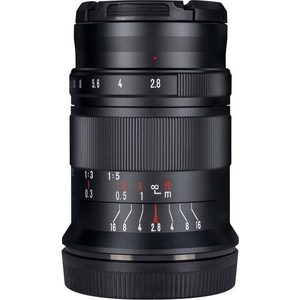
The 7Artisans 60mm f/2.8 MKII is the most affordable way to get true 1:1 macro magnification in 2026. Built for APS-C crop-sensor mirrorless cameras (Sony E, Fujifilm X, Canon M/RF-S, Nikon Z DX), it features solid metal construction and internal focusing. Manual focus only — but for controlled macro work on stationary subjects, that's no handicap. At well under €200, it's the lowest-cost entry to dedicated macro glass that delivers genuine results.
- Under €200 — lowest-cost dedicated macro glass
- True 1:1 magnification
- Solid metal construction
- Available for Sony E, Fujifilm X, Canon M/RF-S, Nikon Z DX
- Manual focus only — no autofocus
- APS-C only — not for full-frame bodies
Our Verdict
Start with the Raynox DCR-250 (~€70) clipped onto your existing lens. Spend a month photographing insects. If you enjoy macro and want to progress, buy the dedicated 60mm or 90mm lens for your system.
Don't skip the Raynox step. It costs almost nothing and saves you from buying an expensive lens you won't use. Many macro photographers own the Raynox years later as a backup or loaner — it's genuinely useful.
When you're ready to advance, see our full guide to the best macro lenses for insect photography for system-by-system deep dives on every major option.
FAQ
Do I really need a dedicated macro lens?
No, but it helps enormously. You can achieve macro results with extension tubes or close-focus kit lenses, but a dedicated 1:1 macro lens is sharper, faster, and easier to use. If macro is a one-time experiment, skip the dedicated lens. If it becomes your primary photography, a macro lens pays for itself in speed and quality.
What's the difference between 60mm and 90mm macro?
Working distance. The 60mm focuses at 3–5cm from the subject. The 90mm focuses at 10–12cm from the subject. If insects spook easily or you use external flash, the 90mm's extra distance is valuable. For stationary subjects like flowers, the 60mm is adequate and cheaper.
Can I use a regular telephoto lens for macro?
No. Telephoto lenses have very close minimum focus distances. You'd need extension tubes and lose autofocus. A dedicated 1:1 macro lens is far simpler and sharper.
Will I regret starting with Raynox instead of a dedicated lens?
No. The Raynox teaches you whether you enjoy macro work. It's a €70 learning investment. Many experienced macro photographers keep the Raynox as backup. It's not inferior — it's just smaller and less convenient than a dedicated lens. For learning, it's perfect.