
Raynox DCR-250 Review: The Cheapest Way to Shoot Serious Macro
As an Amazon Associate and member of other affiliate programs, we earn from qualifying purchases. How we test →
Last updated: September 2026 • Score: 8.7/10
- Our score — 8.7/10
- Best at — ~€60 — the cheapest route to macro capability
- Watch out for — Edge sharpness soft at wide apertures
The Raynox DCR-250 costs around €60. It snaps onto almost any lens in seconds and immediately gives you macro capability that would otherwise require a dedicated macro lens costing ten times as much.
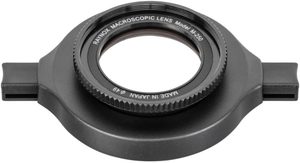
A +8 diopter supplementary lens that clips onto any lens with a 52–67mm filter thread in 3 seconds. Reduces minimum focusing distance dramatically, giving macro capability without a dedicated macro lens. Centre sharpness is excellent when stopped down. For €60, the best entry point into macro photography available.
- ~€60 — the cheapest route to macro capability
- Universal fit — 52–67mm filter threads
- Snaps on in 3 seconds, off in 3 seconds
- Excellent centre sharpness when stopped down
- No permanent lens modification
- Edge sharpness soft at wide apertures
- Not weather sealed
- Reduced working distance — must get very close
- AF slower and less accurate at high magnification
Specifications
| Spec | Value |
|---|---|
| Diopter | +8 |
| Mounting system | Universal snap-on (52–67mm filter threads) |
| Weight | ~60g |
| Weather sealing | None |
| Autofocus | Works but slower at high magnification |
| Magnification | 0.5–2x depending on host lens |
| Price | ~€60 |
What is the Raynox DCR-250?
The DCR-250 is a close-up supplementary lens — essentially a high-quality magnifying glass that clips onto the front of your existing lens. The +8 diopter lens reduces the minimum focusing distance dramatically, allowing you to get much closer to small subjects.
Universal mounting: Fits most lenses with 52–67mm filter threads via a snap-on adapter. No permanent modification. Clips on in 3 seconds, removes in 3 seconds.
For €60, it gives macro capability that would normally require a dedicated €600+ macro lens.
Magnification results on different lenses
- With a 90mm macro lens: Pushes magnification beyond 1:1 into the 1.4–2x range. Extreme close-up capability.
- With a 100–400mm at 400mm: Effective macro in the 0.5–1x range. Useful for small butterflies and dragonflies while maintaining safe working distance.
- With a standard 50mm: Gives roughly 0.5–0.7x — solid close-up capability for flowers and small objects.
Image quality
Centre sharpness: Excellent. The DCR-250 is genuinely sharp at the centre of the frame, especially when stopped down to f/8 or smaller.
Edge sharpness: Soft at wide apertures (f/4–5.6), acceptable when stopped down. For macro work, you're stopping down anyway for depth of field, so edge softness is not a major limitation.
Vignetting: Minimal with most modern lenses. Some older wide-angle lenses show more vignetting.
Optical quality: Surprisingly good for the price. Not as sharp as a dedicated macro lens, but the difference narrows considerably when stopped down.
Practical considerations
Reduced working distance: The DCR-250 reduces minimum focusing distance significantly. You must get very close to your subject. Challenging with fast-moving insects or in windy conditions.
Autofocus accuracy: Autofocus still works but is slower and less accurate. Manual focus is more reliable at high magnification.
Not weather sealed: The adapter itself is not sealed. In wet conditions, water can creep between lens and adapter. Bring a cloth if shooting in rain.
Versatility: At €60, you can keep it permanently on a general zoom lens. When a macro opportunity appears, you're ready. No expensive macro lens to carry.
Verdict: 8.7/10
The Raynox DCR-250 is exceptional value. For €60, you get genuinely useful macro capability on any lens. Centre sharpness is excellent, especially stopped down.
Best for: Budget macro photographers, wildlife photographers who want occasional macro capability, anyone wanting to test macro before buying a dedicated macro lens.
Not ideal for: Professional macro work requiring consistency (edge softness may limit you), fast-moving insects (reduced working distance is challenging).
Highly recommended as a first macro solution. Many photographers buy a DCR-250 to test before investing in dedicated macro lenses. It often surprises them with its quality. When you're ready to upgrade, see our guide to choosing a dedicated macro lens.
FAQ
Is the Raynox as sharp as a dedicated macro lens?
No, but at f/8–11 (typical macro apertures), the difference is smaller than you'd expect. For €60 vs €600, the sharpness-per-euro is exceptional.
Will it damage my lens?
No. It's a supplementary lens that clips onto the filter thread. Completely reversible. Your original lens is not modified.
Does it work with zoom lenses?
Yes. Zoom lenses are ideal. At 400mm on a telephoto zoom, you get impressive reach plus macro capability combined.